 By admin
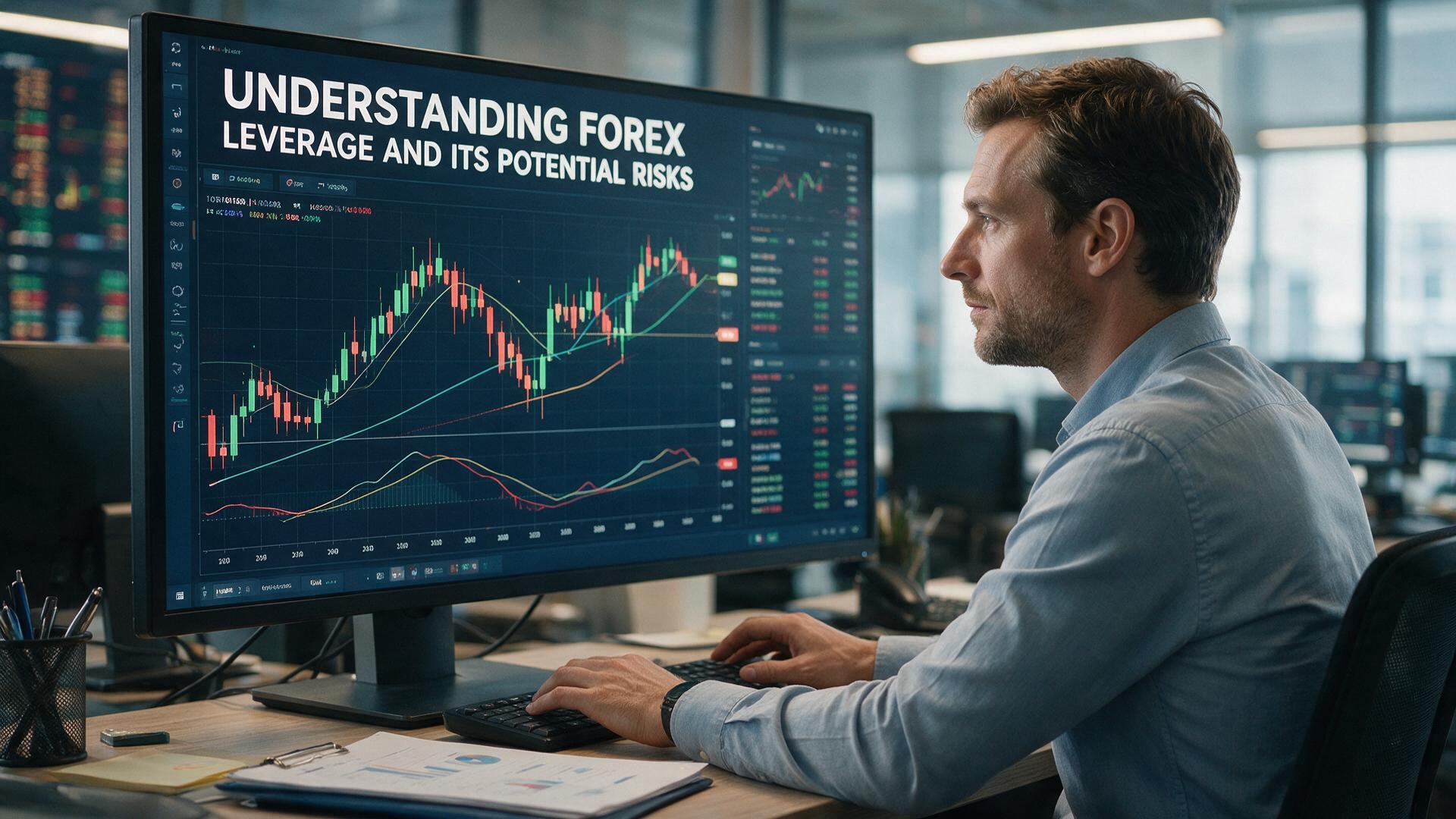
The Double-Edged Sword of Borrowed Capital
Leverage is the reason forex trading attracts so much attention and the reason it destroys so many accounts. It's the mechanism that lets you control a large position with a small amount of capital, and it's the reason a small price move can produce a large gain or a devastating loss. For beginners, leverage looks like an opportunity. For experienced traders, it looks like a tool that requires respect. Understanding forex leverage explained in plain terms is the first step toward using it without being destroyed by it.
The basic idea is simple. In forex, you're trading currencies in pairs, and the price movements are typically small. A move of 1% in a major currency pair is significant, and most daily moves are much smaller than that. If you had to put up the full value of the position, the returns would be tiny, and few people would bother. Leverage solves that problem by letting you borrow the capital to control a larger position. Your broker puts up the rest, and you're responsible for the gains and losses on the full position. That's the appeal, and it's also the danger.
The leveraged forex trading industry is built on this mechanism, and it's available to almost anyone with an internet connection and a small deposit. That accessibility is a double-edged sword. It gives ordinary people access to markets that were once reserved for institutions, but it also exposes them to risks that they may not fully understand. The brokers make money from spreads and commissions regardless of whether their clients win or lose, which means the incentives aren't always aligned with the trader's best interests. That's why understanding leverage isn't optional—it's essential.
How Leverage and Margin Actually Work
Leverage is expressed as a ratio, like 50:1 or 100:1. A 50:1 leverage ratio means you can control $50,000 worth of currency with $1,000 of capital. The $1,000 is your margin, which is the collateral you put up to open the position. The broker holds it as security, and it's the buffer against losses. If your position moves against you, the loss is deducted from your margin. If the margin runs out, the broker will close your position to prevent further losses. That process is called a margin call, and it's one of the most important concepts to understand.
Margin requirements vary by broker and by regulatory jurisdiction. In the United States, the major regulators cap leverage for retail forex traders at 50:1 for major pairs and 20:1 for minor pairs. In Europe, the caps are lower, at 30:1 for major pairs and 20:1 for minor pairs. In some offshore jurisdictions, leverage can be much higher, sometimes 500:1 or even 1000:1. Higher leverage means smaller margin requirements, which means you can open larger positions with less capital. That sounds attractive, but it also means that a small adverse move can wipe out your account.
The math is worth working through. Suppose you have $1,000 and you use 100:1 leverage to open a position worth $100,000. That's a standard lot in forex, which represents 100,000 units of the base currency. If the currency moves 1% in your favor, you make $1,000, which doubles your account. If it moves 1% against you, you lose $1,000, which wipes out your account entirely. A 1% move in forex is not unusual—it happens regularly, sometimes in minutes. That's why high leverage is so dangerous. It magnifies both the gains and the losses, and the losses can come faster than you expect.
Margin calls are the mechanism that prevents you from losing more than you have. When your account equity falls below a certain percentage of your margin requirement, the broker will require you to deposit more funds or close positions. If you don't, the broker will close the positions for you, often at the worst possible time. That forced liquidation is one of the ways traders lose money in forex, because it happens automatically and you have no control over the timing. The margin trading strategies that work are built around avoiding margin calls, not around hoping they won't happen.
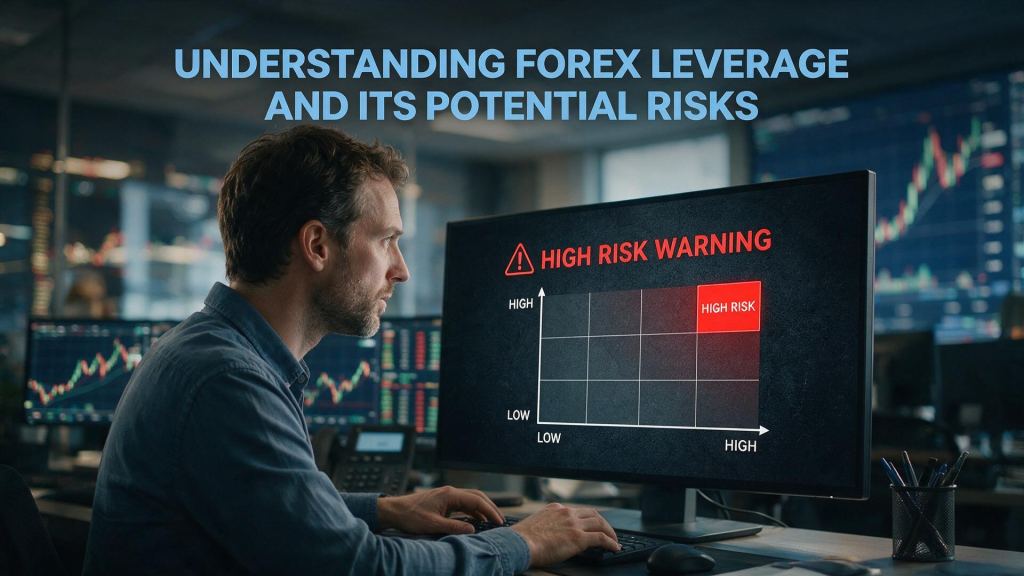
The Hidden Costs of Leverage
Leverage isn't free. Brokers charge interest on the borrowed capital, usually in the form of a rollover or swap fee that's applied daily. The amount depends on the interest rate differential between the two currencies in the pair, and it can be positive or negative depending on which direction you're trading. If you're long a high-yielding currency and short a low-yielding one, you might earn a positive rollover. If you're on the other side, you'll pay. Those costs add up over time, especially for positions held for weeks or months, and they can eat into your profits or deepen your losses.
Spreads also matter more with leverage. Every trade has a spread—the difference between the bid and the ask price—and that spread is a cost. With high leverage, you're trading larger positions, which means the spread costs are larger in absolute terms. A tight spread on a small position might be negligible, but on a large leveraged position, it can be a significant drag on returns. The costs are especially important for short-term traders, because they're paying spreads more frequently. Over many trades, those costs can overwhelm any edge you might have.
Slippage is another hidden cost that becomes more significant with leverage. Slippage is the difference between the price you expected to get and the price you actually got. It happens when the market moves quickly or when liquidity is thin, and it can be especially severe during news events or market stress. With a leveraged position, slippage can turn a small loss into a large one, because the position is larger than your capital would normally allow. The forex trading risks that traders focus on are usually about price moves, but the hidden costs can be just as damaging.
Overnight financing costs and swap fees are also worth understanding. When you hold a leveraged position overnight, you're borrowing money, and you pay interest on that borrowing. The rate is usually based on the difference between the two currencies' interest rates, plus a broker markup. If you're holding a position for weeks or months, those costs can be substantial. Some traders focus on positive carry trades, where the interest rate differential works in their favor, but those trades come with their own risks. The costs are a reminder that leverage is a tool with a price, and that price has to be factored into your strategy.
Managing Leverage Risk
Forex risk management is the discipline that keeps leverage from destroying your account. The first principle is to use less leverage than your broker allows. Just because you can use 50:1 doesn't mean you should. Many successful traders use much lower effective leverage, often 5:1 or 10:1, because it gives them room to be wrong without being wiped out. The maximum leverage is a limit, not a target, and treating it as a target is a common mistake that leads to blown accounts.
Position sizing is the second principle. Instead of thinking about how much leverage you can use, think about how much you're willing to lose on each trade. A common rule is to risk no more than 1% to 2% of your account on any single trade. That means if you have a $10,000 account, you're risking $100 to $200 per trade. With a stop-loss at a reasonable level, that risk translates into a position size. The position size might be much smaller than the maximum leverage would allow, and that's the point. Sizing positions based on risk rather than on available leverage is what separates traders who survive from those who don't.
Stop-losses are the third principle. Every trade should have a stop-loss order that limits your loss if the market moves against you. The stop should be placed at a level where your trade thesis is invalidated, not at an arbitrary distance. The size of the stop, combined with your risk per trade, determines your position size. Without a stop-loss, a leveraged position can run up losses that exceed your account balance, which is a scenario that no trader wants to experience. The stop is your protection against the worst-case scenario.
Diversification and correlation management are also part of leverage risk management. If you're holding multiple leveraged positions that are correlated, your effective risk is higher than you might think. Two long positions in EUR/USD and GBP/USD are essentially two bets on dollar weakness, and a dollar rally will hit both at once. Managing correlation means limiting your overall exposure to any single currency or theme, and it's especially important when you're using leverage. The margin trading strategies that work are built on this kind of discipline, not on taking bigger positions and hoping for the best.
Knowing When to Avoid Leverage
There are times when leverage should be avoided entirely. If you're new to forex, the first priority should be learning how the market works, not maximizing returns. Trading a small account without leverage, or with very low leverage, gives you a chance to develop your skills without risking significant capital. The mistakes you make early on will cost you less, and the lessons will be just as valuable. Starting with high leverage is like learning to drive on a racetrack—you're likely to crash before you learn anything useful.
Leverage should also be avoided during periods of extreme market volatility. When the market is moving rapidly, stop-losses can be triggered at levels far from where you placed them, and slippage can turn a controlled loss into a large one. Central bank announcements, geopolitical events, and market panics are all times when leverage becomes more dangerous. Experienced traders often reduce their position sizes or step aside entirely during those periods, because the risk of being caught in a violent move is too high. The forex trading risks that are manageable in normal conditions can become unmanageable in a crisis.
Emotional state is another factor. If you're tired, stressed, or emotionally compromised, you're more likely to make impulsive decisions, and leverage amplifies the consequences of those decisions. Trading when you're not at your best is a bad idea regardless of leverage, but with leverage, the stakes are higher. Knowing when to step away is a skill that every successful trader develops, and it's especially important for those using borrowed capital.
Finally, be honest about your experience and your goals. Leverage is a tool for experienced traders who have a proven strategy and a disciplined approach to risk management. For beginners, it's a shortcut to losses. The forex market is challenging enough without adding the complexity and risk of high leverage. Starting small, learning the ropes, and gradually increasing leverage as you gain experience is a safer path to long-term success. The traders who last are the ones who understand that survival is more important than maximizing returns, and that's the lesson leverage teaches better than anything else.