 By admin
The Oldest Economic Force, Still the Most Powerful
Strip away the jargon, the charts, and the endless commentary, and commodity markets come down to one thing: how much of something is available, and how badly people want it. That's it. Supply and demand. It sounds almost too simple to be useful, but the simplicity is deceptive. The forces that determine supply and demand in commodity markets are complex, slow-moving in some cases and violently fast in others, and they interact in ways that can catch even experienced investors off guard. Understanding commodity supply and demand isn't about memorizing a formula. It's about understanding the specific dynamics of each market and how they respond to changing conditions.
What makes commodities different from stocks or bonds is that they're physical. You can't produce more gold because the price went up, at least not quickly. You can't drill a new oil well overnight. You can't grow a new crop in a month. The physical constraints on supply create lags that don't exist in other markets, and those lags are a major source of volatility. When demand surges and supply can't respond quickly, prices spike. When supply floods the market and demand can't absorb it, prices collapse. The commodity market fundamentals are ultimately about those imbalances and how they resolve over time.
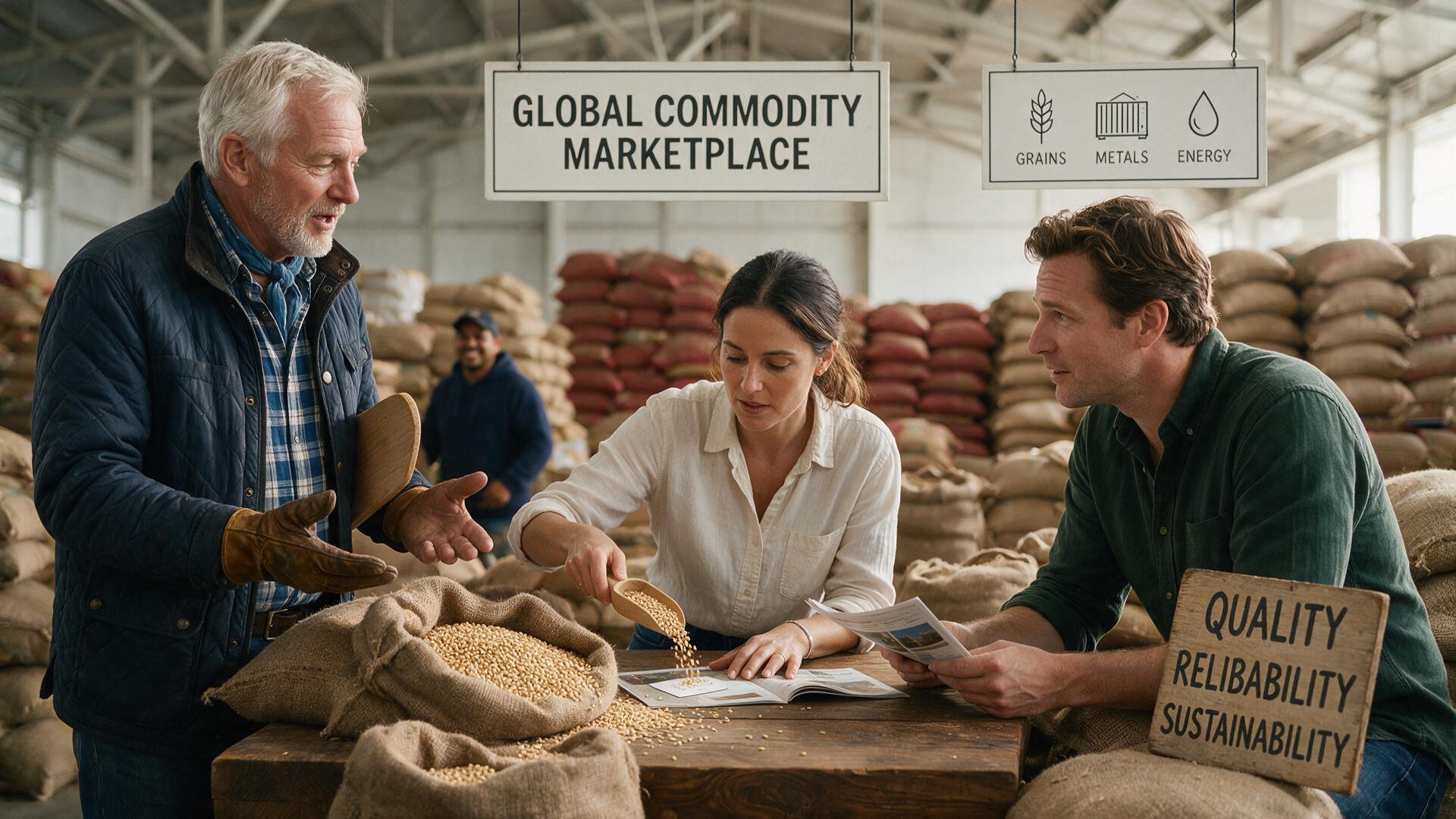
It's also worth understanding that commodity markets are global. A drought in Brazil affects coffee prices in New York. A pipeline shutdown in the Middle East affects gasoline prices in Europe. A miners' strike in Chile affects copper prices in China. The global commodity markets are interconnected in ways that make local events matter far beyond their borders, and that interconnectedness is both a source of opportunity and a source of risk. Investors who only look at their own country's supply and demand miss the bigger picture.
Supply: Why It's Harder to Increase Than You Think
Supply in commodity markets is constrained by geology, geography, and time. You can't simply decide to produce more oil if the reserves aren't there, or if the infrastructure to extract and transport it doesn't exist. New mines take years, sometimes decades, to develop. New oil fields require massive capital investment and face increasing regulatory and environmental hurdles. Agricultural supply depends on weather, which is unpredictable and increasingly affected by climate change. Those constraints mean that supply responds slowly to price signals, and that slow response is a major driver of commodity cycles.
The concept of elasticity is useful here. Supply is elastic if producers can quickly increase output in response to higher prices. It's inelastic if they can't. Most commodities have inelastic supply in the short term, because the physical and capital constraints are significant. That means a demand shock can produce a large price move, because supply can't adjust quickly enough to absorb it. Over longer periods, supply becomes more elastic as new production comes online, which is why commodity price spikes tend to fade over time.
Inventories are the buffer that smooths out short-term imbalances. When supply exceeds demand, the excess goes into storage. When demand exceeds supply, inventories are drawn down. The level of inventories relative to consumption is a key indicator of how tight the market is. Low inventories mean the market is vulnerable to supply disruptions, because there's less cushion to absorb shocks. High inventories mean the market is well-supplied and price spikes are less likely. Watching inventory data is one of the most reliable ways to gauge the balance between supply and demand.
Production decisions by major producers also matter, especially in markets like oil where a small number of countries control a large share of output. OPEC+ decisions can shift the global supply balance overnight, and those decisions are driven by politics as much as economics. The cartel's willingness to coordinate production cuts or increases is a major factor in oil prices, and it's one that investors need to track closely. In other commodities, production is more fragmented, but large producers still have outsized influence.
Demand: The Force That's Easier to Predict but Harder to Control
Demand for commodities is driven by economic activity. When the global economy is growing, demand for energy, metals, and agricultural products rises. When it's slowing, demand falls. That's why commodity prices are often described as a barometer of global growth. The relationship isn't perfect—different commodities respond to different drivers—but the broad trend is clear. Economic expansions tend to be good for commodities, and contractions tend to be bad.
China is a dominant factor in many commodity markets. The country is the world's largest consumer of iron ore, copper, coal, and many other raw materials, and its infrastructure spending and manufacturing activity can move global prices. When China is building, commodity prices tend to rise. When it's slowing, they tend to fall. The commodity price analysis that ignores China is missing a major piece of the puzzle, especially for industrial metals and energy.
Demand can also be driven by technology and policy. The transition to renewable energy is increasing demand for copper, lithium, cobalt, and other metals used in batteries and electrical infrastructure. That's a structural shift that's likely to play out over decades, and it's one of the reasons some analysts are bullish on those metals. Policy decisions, like subsidies for electric vehicles or mandates for renewable energy, can accelerate or slow those trends. Understanding the policy backdrop is part of understanding demand.
Demand elasticity matters too. Some commodities have elastic demand—consumers can reduce consumption if prices rise too much. Others have inelastic demand, meaning people keep buying regardless of price. Oil is relatively inelastic in the short term, because people need to drive to work and heat their homes. That means price spikes can persist without triggering a sharp drop in consumption. Over longer periods, demand becomes more elastic as consumers adapt, but the short-term inelasticity is why oil prices can spike so dramatically.
How the Two Forces Interact to Set Prices
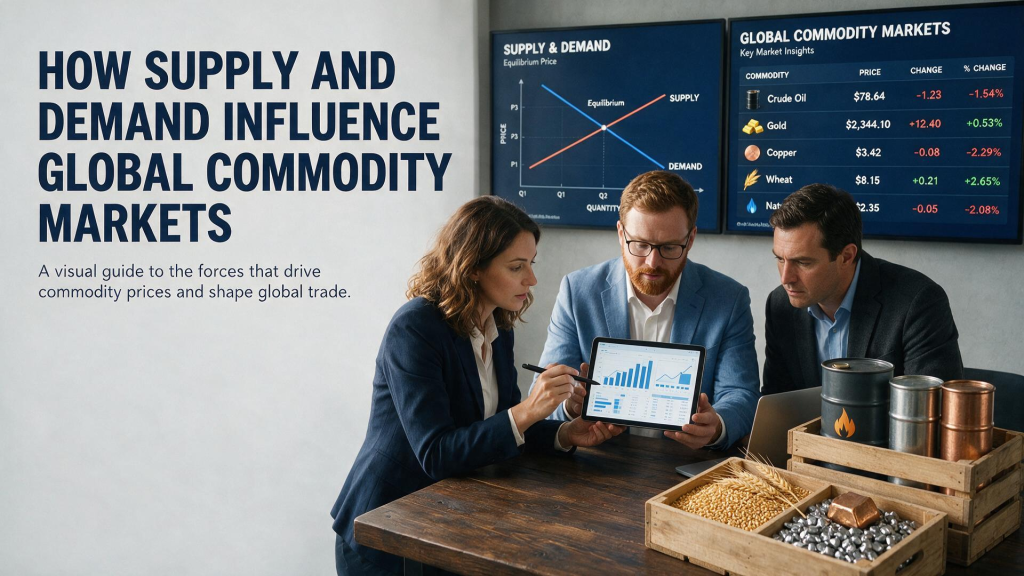
Prices are where supply and demand meet. When demand exceeds supply, buyers bid up the price until enough of them drop out of the market to balance it. When supply exceeds demand, sellers compete for buyers, and the price falls until enough supply is withdrawn to balance it. That's the textbook version, and it works well enough as a framework. But in practice, the balance is never static. Supply and demand are constantly shifting, and prices are constantly adjusting to those shifts.
The interaction is especially interesting in markets where supply is inelastic. If demand rises sharply and supply can't respond, the price has to rise enough to ration demand. That's what happened in oil markets during the 2022 energy crisis, when Russia's invasion of Ukraine disrupted supplies and prices spiked. The natural resource investments that were positioned for supply disruptions did well, while those that were positioned for stability suffered. The lesson is that the balance between supply and demand can shift quickly, and investors need to be prepared for it.
Expectations play a role too. Markets aren't just responding to current supply and demand—they're responding to what people expect supply and demand to be in the future. If the market expects a supply disruption, prices rise before the disruption happens. If it expects a demand slowdown, prices fall before the slowdown materializes. That forward-looking behavior is why commodity prices can move even when current conditions are stable. It's also why surprises are so powerful, because they force the market to reprice expectations.
Speculation can amplify the effect. Commodity markets are full of traders who don't actually want the physical commodity—they're just betting on the price. That speculation can push prices away from what the physical supply and demand would justify, especially in the short term. It can also create feedback loops: rising prices attract more speculative buying, which pushes prices higher, which attracts more buying. Those loops eventually break, but they can run for a while, and they're one of the reasons commodity markets can seem disconnected from fundamentals.
Applying the Framework to Real Investments
For investors, the practical application of supply and demand analysis is understanding where you are in the cycle. Are we in a period of tight supply and strong demand, which is good for prices? Or are we in a period of ample supply and weak demand, which is bad for prices? The answer varies by commodity, and it changes over time. The investors who do best are the ones who stay informed about the supply and demand dynamics of the commodities they're invested in, and who adjust their positions as those dynamics change.
Diversification across commodities helps, because different commodities respond to different drivers. Energy is driven by OPEC+ policy and geopolitical risk. Industrial metals are driven by Chinese growth and infrastructure spending. Precious metals are driven by interest rates and currency values. Agricultural products are driven by weather and trade policies. Owning a mix gives you exposure to different supply and demand dynamics, which reduces the risk that a single commodity's problems will derail your portfolio.
It's also worth being patient. Commodity cycles can be long, and prices can stay below or above what fundamentals suggest for extended periods. The investors who do best are the ones who can hold through those periods and rebalance when prices diverge from value. That's easier said than done, especially when the market is moving against you, but it's the discipline that separates successful commodity investors from those who chase trends and get burned.
Finally, remember that supply and demand are the foundation, but they're not the whole story. Policy decisions, technological change, geopolitics, and market psychology all play a role. The commodity market fundamentals are a framework for thinking, not a formula for predicting. The best investors use that framework to understand what's happening and to position themselves for a range of outcomes, rather than trying to predict a single outcome with certainty. That approach doesn't guarantee success, but it's more robust than any forecast could be.