 By admin
The Trade-Off That Defines Fixed Income
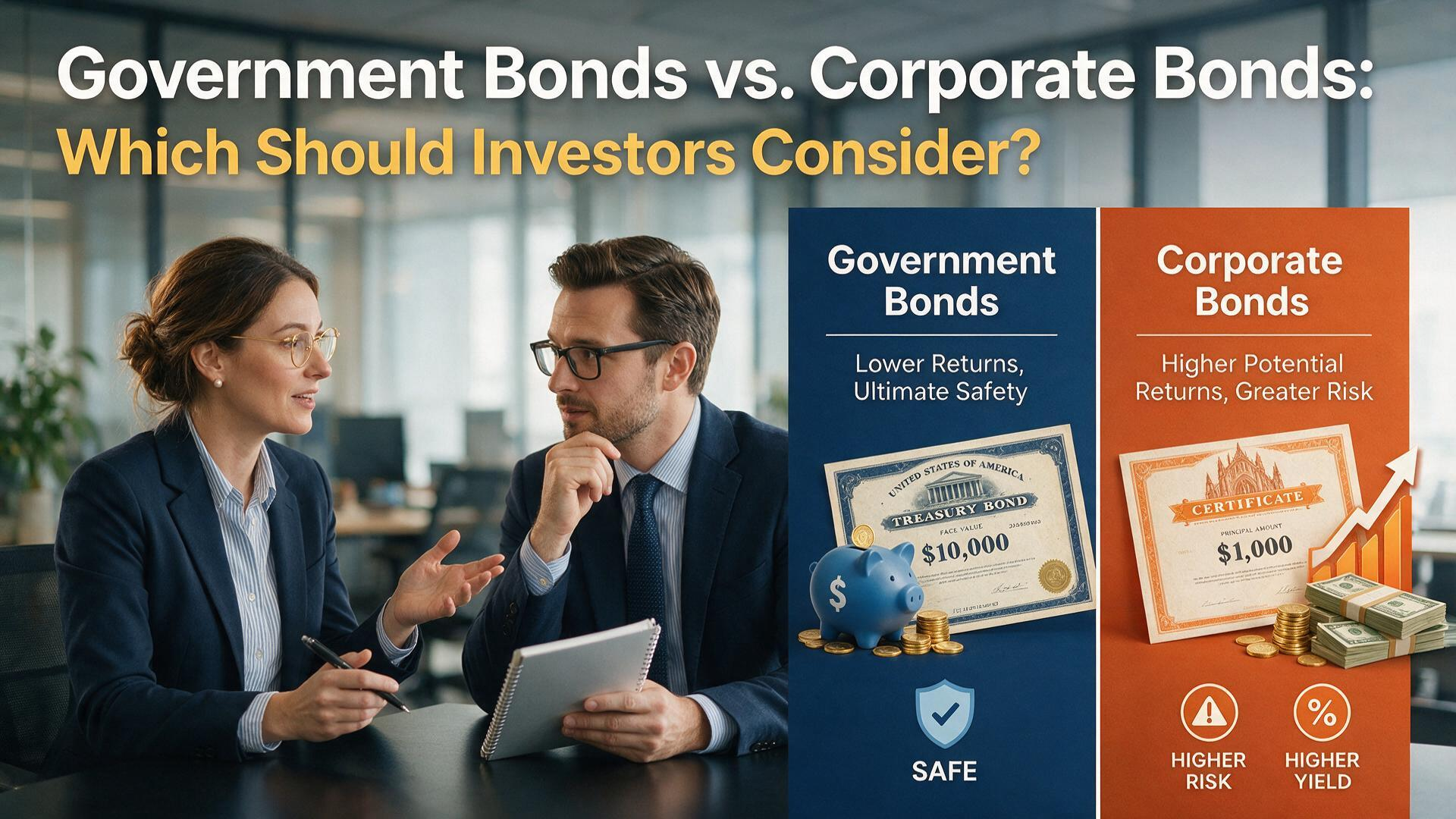
Every bond investor eventually confronts the same question: should I lend my money to the government, or to a company? On the surface, the choice seems simple. Government bonds are safer. Corporate bonds pay more. That's the trade-off in a nutshell, and for a lot of investors, it's enough to make a decision. But the government bonds vs corporate bonds comparison gets more interesting when you dig into why the yield gap exists, how it behaves during crises, and whether the "safe" label on government debt still means what it used to. The bond risk comparison that matters isn't just about default probability. It's about what you're actually being paid to risk, and whether that payment is fair.
The foundation of the comparison is credit risk. U.S. Treasury bonds are backed by the full faith and credit of the federal government, which has the power to tax and, ultimately, to create money. That makes default extremely unlikely, and it's why Treasuries serve as the benchmark against which all other bonds are measured. Corporate bonds carry the risk that the company issuing them goes bankrupt, and investors demand extra yield to compensate for that risk. That extra yield is called the credit spread, and it's the price of accepting the possibility that you might not get your money back [citation:3][citation:7].
But the spread isn't static. It widens and narrows based on economic conditions, market sentiment, and the financial health of the corporate sector. Understanding how and why it moves is the key to making a smart choice between the two. The fixed income strategies that work are built around reading those movements, not just accepting the first yield you see.
Why Corporate Bonds Pay More
The yield gap between corporate and government bonds exists for a reason, and it's not a free lunch. When you buy a corporate bond, you're taking on the risk that the issuer defaults, and that risk is real. Companies go bankrupt. Earnings deteriorate. Balance sheets weaken. When that happens, bondholders can lose some or all of their principal, depending on where they sit in the capital structure and what's left after liquidation. The higher yield on corporate bonds is compensation for that possibility [citation:3][citation:9].
The size of the compensation varies by credit quality. Investment-grade corporate bonds, issued by companies with strong balance sheets and stable cash flows, typically yield only a modest premium over Treasuries, often in the range of one to two percentage points [citation:3]. High-yield bonds, issued by companies with weaker credit profiles, pay much more, but the default risk is correspondingly higher. The corporate bond investing decision isn't just about whether to buy corporate debt. It's about which tier of corporate debt fits your risk tolerance and your view of the economic cycle.
Liquidity is another factor that affects the spread. Treasury bonds are among the most liquid securities in the world, meaning you can buy and sell them quickly without moving the price. Corporate bonds trade less frequently, especially those issued by smaller companies, and that illiquidity commands a premium. The liquidity premium is part of why corporate yields are higher, and it becomes more pronounced during periods of market stress when liquidity dries up. The government securities market's depth is a major advantage that corporate bonds can't match, and investors pay for that advantage through lower yields.
It's also worth understanding that the spread compensates for more than just default risk. Credit spreads reflect the market's assessment of economic conditions, the issuer's industry, and the broader risk environment. When investors are optimistic, spreads narrow, and corporate bonds become relatively more expensive. When they're pessimistic, spreads widen, and corporate bonds become cheaper. That cyclical behavior is one of the reasons corporate bonds can be a source of opportunity for investors who understand the cycle, and a source of pain for those who don't [citation:3][citation:14].

What Happens When Markets Get Scared
The relationship between government and corporate bonds becomes most interesting during periods of stress. When the economy slows or a crisis hits, investors tend to flee riskier assets and buy Treasuries, which are seen as a safe haven. That flight to safety pushes Treasury yields down and prices up. Corporate bonds, meanwhile, face selling pressure as investors worry about defaults, which pushes their yields up and prices down. The result is that the spread between the two widens, sometimes dramatically [citation:3].
That widening is a double-edged sword. For existing corporate bondholders, it means losses, because the price of their bonds falls as yields rise. For investors who are buying during the crisis, it means an opportunity, because corporate bonds are suddenly offering much higher yields for the same credit risk. The bond risk comparison during a crisis isn't just about which bond is safer. It's about which bond is offering better compensation for the risk you're taking, and that calculation changes as spreads move.
The 2008 financial crisis and the 2020 pandemic crash both illustrated this pattern. Corporate spreads spiked as investors panicked, and then narrowed as central banks intervened and confidence returned. The investors who bought corporate bonds during the panic were rewarded, while those who sold locked in losses. The lesson isn't that you should always buy during a crisis. It's that the spread between government and corporate yields is a measure of market fear, and fear creates opportunities as well as risks [citation:14].
It's also worth noting that the relationship between the two can break down in unexpected ways. In 2022, both government and corporate bonds fell as the Fed raised rates aggressively. The usual safe-haven dynamic didn't work, because the rate increases were so large that they overwhelmed everything else. That episode was a reminder that the fixed income strategies that rely on historical patterns don't always work, and that diversification within fixed income is as important as diversification across asset classes.
When the "Safe" Label Gets Complicated
Government bonds have long been considered the ultimate safe asset, and for good reason. The U.S. government has never defaulted on its debt, and it has enormous resources at its disposal. But the definition of "safe" has become more complicated in recent years. A government bond is safe from default risk, but it's not safe from interest rate risk, inflation risk, or fiscal risk. Those risks can erode the real value of your investment even if the nominal payments arrive on schedule [citation:6].
The fiscal picture is worth considering. U.S. government debt levels are high and rising, and the cost of servicing that debt is consuming a growing share of the budget. Some investors argue that this fiscal trajectory makes government bonds riskier than the conventional wisdom suggests, and that high-quality corporate bonds may offer a better risk-reward profile for certain investors. The argument isn't that the U.S. is about to default. It's that the risks embedded in government debt are different from what they used to be, and that the spread between government and corporate yields may not fully reflect those differences [citation:6].
Inflation is the other major risk for government bondholders. If inflation runs higher than the yield on your bond, you lose purchasing power even if you get all your payments. Corporate bonds aren't immune to that risk, but they may offer some protection if the issuer has pricing power and can pass costs through to customers. The government securities that are inflation-protected, like TIPS, address this risk directly, but they come with their own trade-offs in terms of yield and complexity.
For most investors, the practical conclusion is that government bonds remain the safest choice for the portion of a portfolio that needs stability and liquidity. They're the asset you want to own when you're worried about a recession, a market crash, or a liquidity crunch. The fiscal and inflation risks are real, but they're slow-moving and unlikely to materialize suddenly. The bond risk comparison should acknowledge those risks without overstating them, because the alternative—reaching for yield in corporate bonds without understanding the credit risk—can be far more dangerous.
Building a Mix That Works for You
The choice between government and corporate bonds doesn't have to be binary. Most investors benefit from owning both, in proportions that reflect their risk tolerance, their time horizon, and their view of the economic cycle. Government bonds provide the stability and liquidity that a portfolio needs during stress. Corporate bonds provide the extra income that makes fixed income worth owning in the first place. The right mix is the one that lets you sleep at night while still earning a reasonable return.
For conservative investors or those nearing retirement, a heavier allocation to government bonds makes sense. The priority is preserving capital and generating reliable income, not maximizing yield. For investors with a longer horizon and a higher tolerance for volatility, a larger allocation to investment-grade corporate bonds can boost returns without taking on excessive risk. The key is to understand what you're buying and why, rather than simply chasing the highest yield available [citation:8][citation:9].
Diversification within corporate bonds is essential. Owning bonds from a single company or a single sector concentrates risk, and a default or a downturn in that area can hit your whole portfolio at once. Spreading across issuers, industries, and credit qualities reduces the impact of any single failure. The corporate bond investing approach that works is built on diversification, not concentration, and that's especially true for the high-yield segment where defaults are more common.
Finally, pay attention to the yield curve and the credit spread environment. When spreads are tight, corporate bonds offer relatively little extra compensation for the risk you're taking, and government bonds may be the better value. When spreads are wide, corporate bonds offer more attractive yields, and the extra income may justify the risk. That's not a timing strategy—it's a valuation framework. The fixed income strategies that work over the long run are built on understanding value, not on predicting the next move. Government and corporate bonds are both tools, and the right tool depends on the job you need done.