 By admin
The Case That Changed American Investing
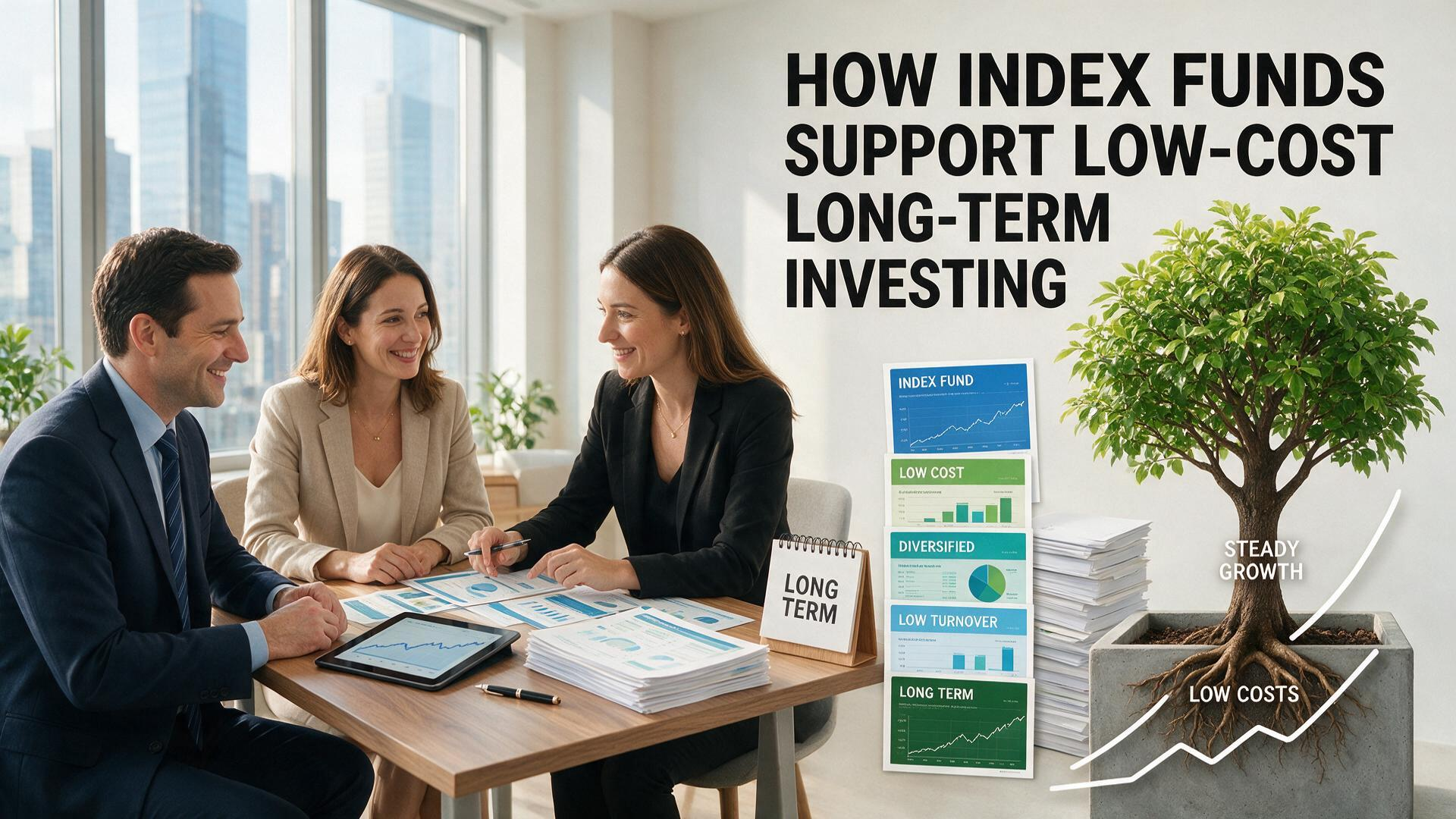
In 1976, Vanguard launched the first retail index fund, and Wall Street mostly laughed. The idea that you'd buy the whole market and accept average returns seemed like giving up before the race began. Fifty years later, index funds hold trillions of dollars, and the joke has aged badly for the people who made it. The shift didn't happen because active managers suddenly became incompetent. It happened because the math became impossible to ignore. Index fund investing works for a simple, stubborn reason: after costs, most investors do better by owning the market than by trying to beat it, and the gap compounds over decades into a difference that changes lives.
The argument rests on arithmetic more than opinion. Professional investors don't all beat the market, because the market is the average of everyone's holdings. Before costs, the average dollar invested earns the market return. After costs, the average dollar earns less. The higher the costs, the bigger the drag. Active funds charge more, trade more, and generate taxes more than index funds do, and those frictions are certain while the payoff from active management is uncertain. That asymmetry is the heart of the case for passive investing strategies, and it's been borne out by data over many decades.
For long-term investors, the appeal isn't just returns. It's simplicity, predictability, and the near-elimination of the kinds of errors that destroy portfolios. You don't have to pick a winning manager. You don't have to worry about style drift or a star analyst leaving for a hedge fund. You don't have to wonder whether your fund is taking risks you can't see. You own the market, you pay a sliver of a fee, and you let time do the work. That's a genuinely radical proposition in an industry built on the idea that expertise is worth paying for, and it's why index funds have become the default for American retirement savers.
Why Costs Matter More Than You Think
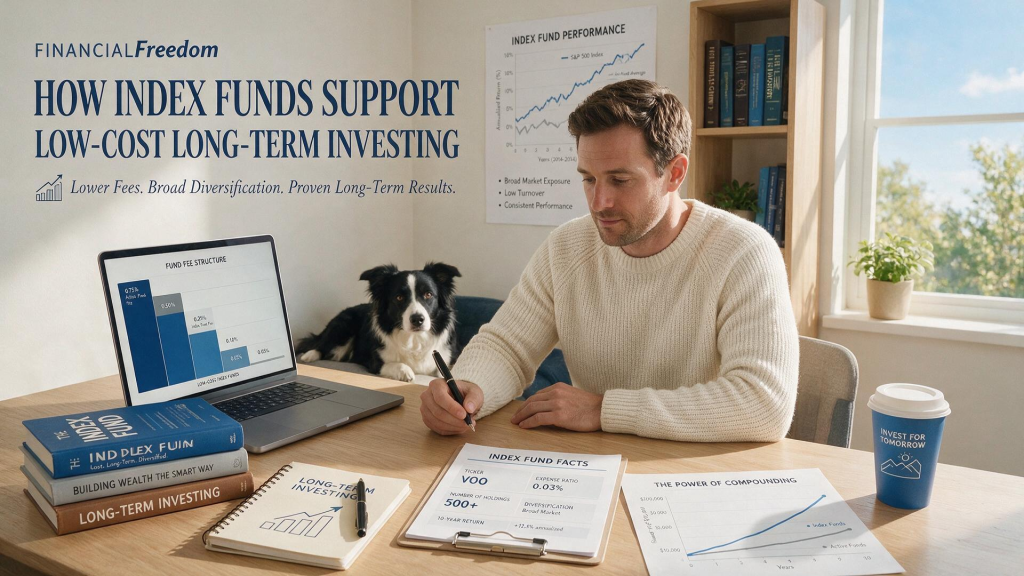
The expense ratio is the most visible cost of any fund, and it's the one where index funds have their clearest advantage. A broad index fund can be had for as little as 0.03% a year, while the average actively managed mutual fund charges roughly ten times that or more. That difference sounds small, but it's not a one-time cost—it's charged every year on your entire balance, and it compounds against you in the same way returns compound for you. The low-cost investment funds that look almost identical on a fact sheet can produce dramatically different outcomes over thirty years.
The math is worth working through because it's counterintuitive for a lot of people. Suppose two funds both earn 7% before costs. One charges 0.05%, the other charges 1.00%. After thirty years, a $10,000 investment in the low-cost fund grows to roughly $74,000. The same investment in the high-cost fund grows to roughly $54,000. That's a difference of about $20,000, or 27% of the final balance, purely from the fee gap. The higher-cost fund didn't need to be terrible to lose badly—it just needed to be expensive. Over a lifetime of saving, that gap can amount to hundreds of thousands of dollars.
Visible expense ratios aren't the whole story. Trading costs, bid-ask spreads, and market impact all add to the real cost of running a fund, and active funds trade far more than index funds do. Those costs come out of the fund's assets before the expense ratio is even calculated, which means the reported expense ratio understates the true drag. Studies that try to measure total costs have found that the gap between active and passive funds is even wider than the headline numbers suggest. The index fund performance advantage is partly a performance story, but it's mostly a cost story, and the cost story is more reliable.
Taxes are the other hidden cost that index funds minimize. Because index funds trade infrequently, they realize fewer capital gains, which means fewer taxable distributions to shareholders. Active funds, especially those with high turnover, generate more taxable events, and those distributions can eat into returns significantly for investors holding funds in taxable accounts. The tax drag compounds just like the expense drag, and over decades it can be substantial. For long-term wealth building in a taxable account, the tax efficiency of index funds is one of their most underappreciated advantages.
Diversification Without the Guesswork
An index fund owns the entire market, or a broad slice of it, in a single purchase. That means you're not betting on any single company, sector, or region. If one stock collapses, it's a tiny fraction of the fund's value. If one sector falls out of favor, the fund's exposure to that sector is proportional to its weight in the market, not to a manager's conviction. That diversification is automatic, and it's far more thorough than most individual investors could achieve on their own without enormous effort and cost.
The diversification isn't just across companies—it's across time. Because index funds don't try to time the market, they're always invested, which means they capture the market's returns whenever they occur. Active managers sometimes sit in cash, waiting for a better opportunity, and that cash drag can be substantial over time. The market's best days are unpredictable and clustered, and missing them can significantly reduce long-term returns. The passive investing strategies that work accept that you'll experience the bad days along with the good, because trying to avoid the bad ones usually means missing the good ones too.
Index funds also eliminate a whole category of risk that active investors face: manager risk. An active fund's performance depends heavily on the decisions of a small number of people, and those people can change. A star manager can leave, retire, or lose their edge. A fund's strategy can drift as the manager chases performance or responds to pressure. Index funds don't have this problem, because there's no manager making discretionary decisions. The fund follows a rules-based methodology, and that methodology doesn't change based on the manager's mood or the fund's recent returns. The index fund performance is the market's performance, minus a tiny fee, and that's a much more predictable thing to own.
There's a psychological benefit too. When you own an index fund, you're not constantly comparing your manager's decisions to what you would have done. You're not second-guessing sector allocations or wondering why the fund sold a stock you liked. You're owning the market and accepting its returns, which removes a huge amount of stress and second-guessing from the investing process. That peace of mind is worth something, especially for investors who might otherwise be tempted to tinker. The best portfolio is the one you can stick with, and index funds are easier to stick with than almost anything else.
What Index Funds Don't Do
Index funds aren't magic, and it's worth being clear about their limitations. They don't protect you from market downturns. When the market falls 30%, an index fund falls roughly 30% too. That's the trade-off for owning the market—you get the market's returns, but you also get the market's losses. Investors who can't tolerate that volatility should hold more bonds or cash, not try to find an index fund that avoids the pain. The low-cost investment funds that work are part of a broader asset allocation, not a substitute for one.
Index funds also don't let you express a view on specific companies or sectors. If you believe a particular industry is poised for growth, an index fund won't give you concentrated exposure to that belief. You can buy sector-specific index funds, but those are still rules-based and won't reflect your individual judgment. For investors who want to act on specific convictions, a core index fund portfolio plus a small satellite allocation to individual stocks or sector funds can be a reasonable approach. The key is to keep the satellite portion small enough that it doesn't undermine the diversification and low costs of the core.
Index funds also can't outperform the market, by definition. They're designed to match the market's returns, minus fees, not to beat them. That means in a year when active managers do well, index funds will lag. Those years happen, and they can be frustrating. But over longer periods, the evidence is overwhelming that the average active manager underperforms after costs, and that the survivors are hard to identify in advance. The long-term wealth building that works for most people is built on accepting average returns rather than chasing above-average ones, because average returns compounded over decades are enough to build substantial wealth.
Finally, index funds require discipline. Because they don't have a manager making decisions, you're the one who has to stay invested through downturns and avoid the temptation to trade. That's easier said than done, especially when the headlines are alarming and the market is falling. But the investors who succeed with index funds are the ones who treat them as long-term holdings, not trading vehicles. They set up automatic contributions, ignore the noise, and let time do the work. The index fund investing approach that works is simple to describe and hard to execute, because the hard part isn't the funds—it's the discipline.
Making Index Funds the Core of a Plan
For most investors, index funds should be the core of the portfolio, not an afterthought. A simple portfolio of a total stock market index fund, an international index fund, and a bond index fund can provide global diversification at a very low cost. That's enough for a lifetime of investing, and adding more funds often adds complexity without adding much benefit. The passive investing strategies that work are simple, and simplicity is a feature, not a bug.
The allocation between stocks and bonds should reflect your time horizon and risk tolerance. Younger investors with decades ahead can hold more stocks, because they have time to recover from downturns. Older investors approaching retirement should hold more bonds, because they have less time to recover and may need to draw on the portfolio soon. The exact percentages matter less than having a plan you can stick with. Rebalancing once a year keeps the allocation on track and forces you to sell what's done well and buy what's lagged, which is a disciplined way to manage risk.
Automatic contributions are the simplest way to stay consistent. Setting up a regular transfer from your bank account to your investment account removes the need to make decisions about when to invest, and it ensures that you're buying through good markets and bad. That's dollar-cost averaging in practice, and while it doesn't guarantee a better return than lump-sum investing, it does guarantee that you'll stay invested. The index fund investing habit is more important than any single decision, and automating it makes the habit easier to maintain.
Finally, be patient. Index funds don't produce spectacular returns in any single year, and they don't make for exciting cocktail party conversation. They just quietly compound, year after year, capturing the growth of the global economy at a cost that's close to zero. That's not glamorous, but it's remarkably effective. The investors who build wealth with index funds are the ones who understand that boring is a feature, not a flaw. They set it up, leave it alone, and let the math do the work. And over decades, the math is very, very powerful.