 By admin
Why Central Banks Move Currencies More Than Anything Else
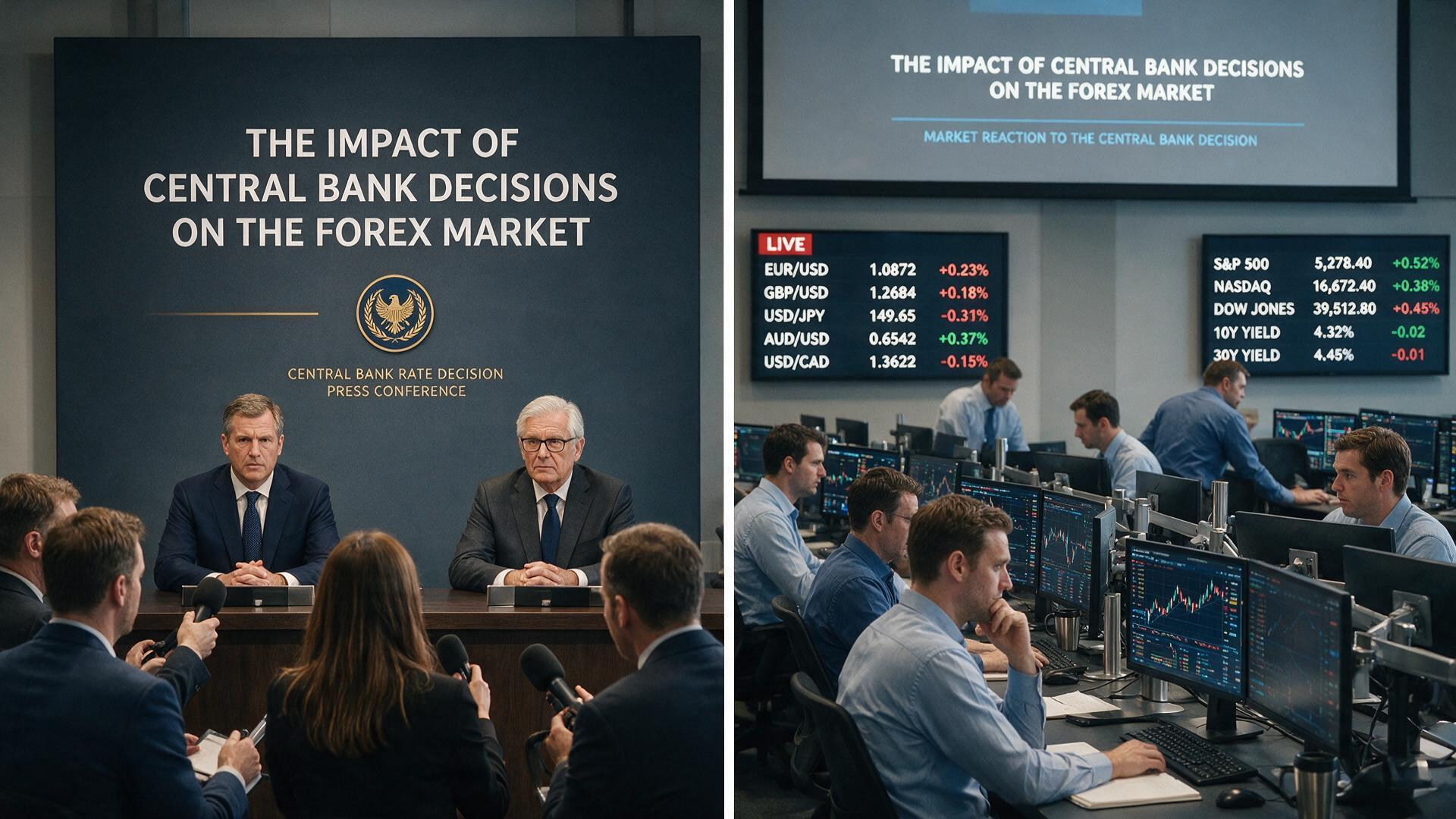
If you spend enough time watching the forex market, you start to notice a pattern. Most days are quiet. Prices drift, ranges hold, and nothing much happens. Then a central bank makes an announcement, and the market explodes. Currencies move hundreds of pips in minutes, stops get triggered, and traders who were comfortably positioned suddenly find themselves on the wrong side of a violent move. That's the power of central bank forex impact, and it's why serious traders organize their calendars around policy meetings rather than treating them as just another item on the schedule.
The reason central banks have so much influence comes down to what they control. They set the cost of money, and the cost of money is the single most important variable in currency markets. When a central bank changes its policy rate, it changes the relative attractiveness of holding its currency versus other currencies. It also changes expectations about inflation, growth, and future policy, which ripple through every corner of the market. A single rate decision can shift the trajectory of a currency for months, and the communication that accompanies it is often more important than the decision itself.
But the relationship between central bank decisions and currency market movements is not as simple as "rate hike equals stronger currency." If it were, forex trading would be easy. The reality is that markets price in expectations, and the reaction to a decision depends on how it compares to what was expected, what it signals about the future, and how the broader environment shapes the interpretation. Understanding those layers is what separates traders who profit from central bank decisions from those who get whipsawed by them.
How Rate Decisions Transmit to Currency Prices
The basic transmission mechanism is through capital flows. Higher interest rates attract capital from abroad, because investors can earn more by holding assets denominated in that currency. To buy those assets, they need the currency, which increases demand and pushes the price up. Lower rates have the opposite effect: capital flows out in search of better returns, and the currency weakens. That's the textbook version, and it holds well enough over time that it's the foundation for most currency analysis.
But the transmission isn't immediate, and it isn't mechanical. Markets are forward-looking, which means the current rate is already reflected in the price. What moves the currency is the surprise—the gap between what the market expected and what actually happened. If the Fed raises rates by 25 basis points and the market had fully priced that in, the dollar might barely move. If the Fed raises by 25 basis points when the market expected nothing, the dollar might rally sharply. The interest rate decisions that move markets most are the ones that catch people off guard.
Forward guidance amplifies the effect. Central banks don't just set rates—they tell the market what they're likely to do next. That guidance shapes expectations, and expectations shape prices. When a central bank signals that it's done hiking, the currency often falls even if rates are high, because the market is looking ahead to the next move. When it signals that more hikes are coming, the currency often rises even if the current rate is unchanged. The market is always trying to price the future, and the central bank's guidance is the most important input in that calculation.
It's also worth understanding that different central banks have different communication styles, and those styles affect how their currencies trade. The Fed is relatively transparent, with a clear framework and regular communication. The ECB is more complex, with a governing council that includes representatives from multiple countries with different priorities. The Bank of Japan has historically been more interventionist and more willing to tolerate a weak currency. The differences matter because they affect how predictable each central bank's decisions are, and predictability is a big part of what moves currency markets.
The Role of Monetary Policy in Currency Valuation
Monetary policy and currencies are connected through more than just interest rates. The size of a central bank's balance sheet, its asset purchase programs, and its liquidity facilities all affect the supply of its currency and the conditions in its financial markets. Quantitative easing, for example, expands the money supply and tends to weaken the currency by increasing the supply of it. Quantitative tightening does the opposite. These programs are less discussed than rate decisions, but they can have significant effects on currency values over time.
The relative stance of monetary policy matters as much as the absolute level. A currency's value depends on how its central bank's policy compares to others. If the Fed is tightening while the ECB is easing, the dollar tends to strengthen against the euro, regardless of the absolute level of rates. That's why traders compare policy across central banks rather than looking at one in isolation. The foreign exchange market analysis that focuses on relative policy is more useful than analysis that focuses on a single country's rates.
Inflation targeting adds another layer. Most major central banks have a mandate to keep inflation under control, and their policy decisions are driven by the inflation outlook. When inflation is rising, central banks tend to tighten, which supports the currency. When inflation is falling, they tend to ease, which weakens it. But the relationship isn't always straightforward. If inflation is rising because of supply shocks that the central bank can't control, it may choose to look through it rather than tighten aggressively. That decision can surprise the market and produce sharp currency moves.
Credibility is another factor that's hard to quantify but easy to observe. A central bank that's seen as credible and independent tends to have a stronger currency, because investors trust that it will maintain price stability over time. A central bank that's seen as politically influenced or prone to inflation tends to have a weaker currency, because investors worry about the erosion of purchasing power. The market's perception of credibility can shift suddenly, and those shifts can produce outsized currency moves that have nothing to do with current policy settings.
How Markets React to Policy Surprises
The most dramatic currency moves happen around surprises. When a central bank does something the market didn't expect, or when it signals a change in direction that wasn't anticipated, the reaction can be violent. The classic pattern is a sharp move in the currency, followed by a period of adjustment as the market reprices expectations. The size of the move depends on the magnitude of the surprise, the liquidity of the market at the time, and the broader risk environment.
Liquidity matters more than most traders realize. Central bank announcements often come at times when liquidity is thin—early morning in New York, or late in the Asian session—which can amplify moves. When there are fewer buyers and sellers, a sudden imbalance can push prices further than it would in a more liquid market. That's why stops can be taken out at levels that seemed safe, and why spreads can widen dramatically during announcement windows. Understanding those dynamics is essential for anyone trading around central bank decisions.
The reaction also depends on the broader context. If the market is already nervous about inflation, a hawkish surprise from the Fed can produce a much larger move than it would in a calm environment. If the market is focused on growth, a rate cut might be interpreted as a sign of weakness rather than a boost, and the currency might fall despite the lower rate. The currency market movements that follow central bank decisions are never just about the decision itself. They're about how the decision interacts with everything else the market is worried about.
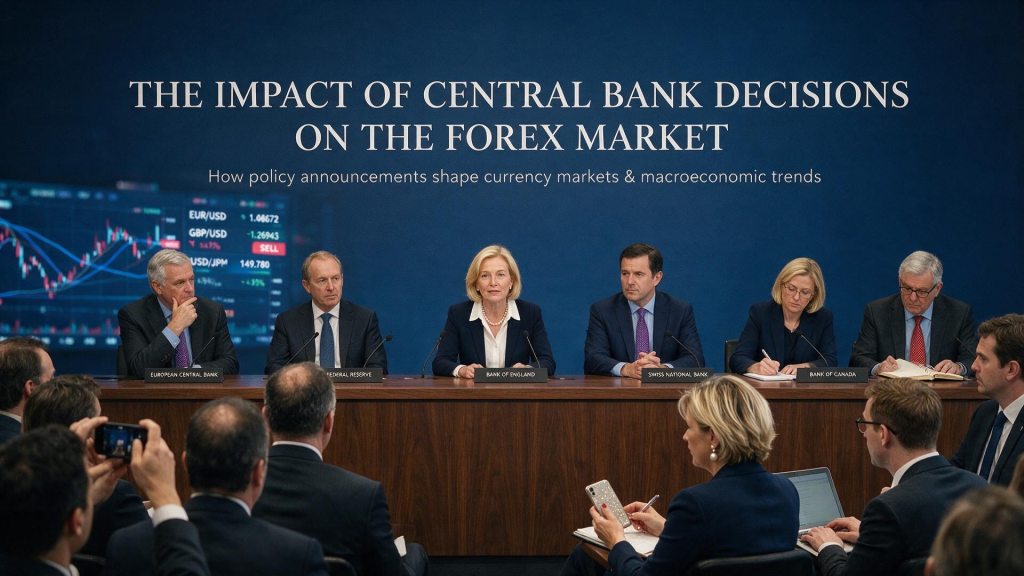
It's also worth noting that markets can reverse quickly after an initial reaction. A currency might spike on a hawkish surprise, then give back the gains as traders digest the details of the statement and the press conference. The press conference is often more important than the statement, because it's where the central bank governor explains the reasoning and answers questions. Those answers can reveal nuances that weren't in the prepared remarks, and the market reacts in real time. Traders who only watch the initial headline miss the bigger picture.
Building a Strategy Around Central Bank Events
The first step in building a strategy around central bank events is to know the calendar. Major central bank meetings are scheduled well in advance, and the market knows when they're coming. That means you can prepare, rather than being caught off guard. The preparation involves understanding what the market expects, what the central bank has signaled, and what the key data points have been since the last meeting. That context is what allows you to interpret the decision and react intelligently.
The second step is to decide how you want to trade around the event. Some traders avoid central bank meetings entirely, because the volatility is too unpredictable and the risk of being whipsawed is too high. Others trade the immediate reaction, trying to capture the initial move. Still others wait for the dust to settle and trade the new trend once it's established. Each approach has tradeoffs. Trading the immediate reaction offers the biggest potential gain but also the biggest risk. Waiting for the trend to establish is safer but gives up some of the move. The right choice depends on your risk tolerance and your trading style.
Risk management is especially important around central bank decisions. The volatility can be extreme, and stops that seemed adequate can be blown through in seconds. Many traders reduce their position sizes around these events, or avoid holding positions through the announcement altogether. Others use options to define their risk, because options limit the downside in a way that spot positions don't. Whatever approach you choose, the key is to recognize that central bank events are different from normal trading conditions, and to size your positions accordingly.
Finally, remember that central bank decisions are just one input into the market, even if they're the most important one. The reaction to a decision can be overridden by other events—a geopolitical crisis, a surprise data release, a shift in risk sentiment. The foreign exchange market analysis that treats central banks as the only thing that matters is incomplete. The best traders incorporate central bank decisions into a broader framework that includes fundamentals, technicals, and market psychology. That framework is what allows them to navigate the volatility rather than being swept away by it.