 By admin
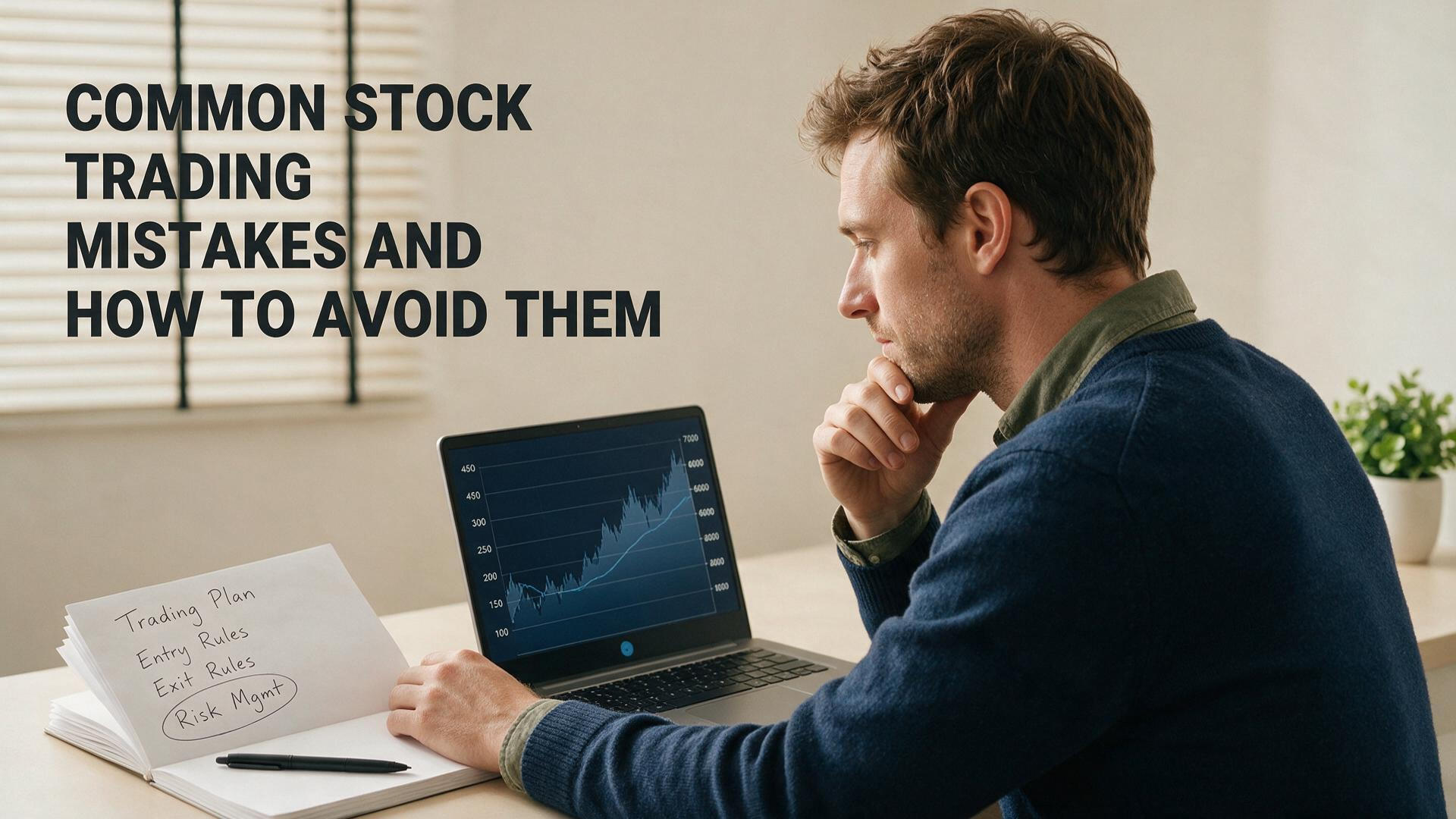
The Mistakes That Cost Investors the Most
Ask any experienced investor about their worst decisions and you'll usually hear the same themes. Not bad stock picks, exactly — more often it's the timing, the sizing, or the emotion behind the trade. The uncomfortable truth is that most of the damage done to portfolios comes from a small number of repeatable errors, and those errors tend to be behavioral rather than analytical. Learning to recognize stock trading mistakes before you make them is worth more than any hot tip or clever screen. The market is hard enough to beat without beating yourself at the same time.
What makes these mistakes so persistent is that they feel right in the moment. Selling when everything is falling feels like protection. Buying when everything is rising feels like opportunity. Loading up on a stock you love feels like conviction. Each of these instincts made sense at some point in human history, but in modern markets they tend to work against you. That's why successful investors don't just study companies — they study themselves, and they build systems that protect them from their own worst impulses. The goal isn't to eliminate emotion but to keep it from making decisions.
The good news is that these mistakes are well-documented and well-understood. You don't have to learn them the hard way by watching your account value drop. You can learn from the people who've already made them, build habits that avoid the worst traps, and improve steadily over time. This isn't about being perfect — everyone makes mistakes. It's about making fewer of them, and making sure the ones you do make are small enough that they don't derail your long-term plan.
Letting Emotion Drive the Trade
Trading psychology is the part of investing most people ignore until it's too late. Fear and greed are the two big ones, and they tend to show up at exactly the wrong times. Fear makes you sell at the bottom, when prices are lowest and the news is worst. Greed makes you buy at the top, when prices are highest and the stories are most exciting. Both feel justified in the moment, and both are usually wrong. The investors who do well over time are the ones who've learned to notice these feelings without letting them dictate their actions.
Confirmation bias is another quiet killer. Once you own a stock, you naturally seek out information that supports your decision and dismiss information that contradicts it. This feels like confidence, but it's really just a filter that prevents you from seeing the warning signs. The antidote is to deliberately seek out the bear case on your holdings, to read the negative arguments, and to ask yourself honestly whether your thesis still holds. Investors who surround themselves only with agreement tend to be the last to notice when a company is deteriorating.
Overconfidence is the third major trap. After a few good trades, it's easy to start believing you have a special insight that other people lack. That feeling often precedes a string of bad decisions, because it encourages you to take larger positions, ignore risk, and abandon the discipline that produced the good results in the first place. The market has a way of humbling people who get too comfortable, and the investors who last tend to stay a little bit uncertain even when things are going well. That uncertainty keeps them careful, and carefulness keeps them in the game.
Anchoring is a subtler bias that affects how investors think about prices. If you bought a stock at $50 and it falls to $30, it's tempting to think of $50 as the "right" price and $30 as a temporary anomaly. But the market doesn't know or care what you paid. The only relevant question is whether the stock is worth owning at today's price, based on its current prospects. Investors who stay anchored to their original purchase price often hold losers too long, waiting for a recovery that never comes. Letting go of the anchor and evaluating each holding fresh is one of the most valuable mental habits you can build.
Ignoring Risk and Position Sizing
Investment risk management is where trading mistakes become expensive. The single most common error is position sizing that's too large. New investors often put a big chunk of their portfolio into a single idea, especially one they're excited about, and that concentration can produce spectacular results when it works. But it can also produce losses big enough to take years to recover from. Most experienced investors cap individual positions at a small percentage of the portfolio, which limits the damage any single mistake can do.
Ignoring correlation is another problem. A portfolio of ten technology stocks might look diversified, but it isn't, because those stocks tend to move together. When the sector falls, everything falls at once, and the apparent diversification provides no protection. Real diversification means owning things that respond differently to the same events, and that requires looking beyond the number of holdings to the actual exposures. Investors who focus only on the count of positions often end up with a portfolio that's far riskier than they realize.
Failing to define a sell plan is another risk management gap. Many investors have a clear idea of why they're buying but no idea when they'd sell. That leaves them making the decision in the middle of a crisis, which is exactly when judgment is worst. Deciding in advance what would make you sell — a broken thesis, a change in management, a deteriorating balance sheet — keeps you from holding losers indefinitely or selling winners too early. The sell plan doesn't have to be elaborate, but it has to exist before you need it.
Leverage is the risk management mistake that can end an investing career. Borrowing money to buy stocks amplifies gains, which is why it's tempting, but it amplifies losses just as much. More importantly, leverage introduces the possibility of forced selling, where a margin call forces you to sell at exactly the worst moment. Investors who use leverage often find that their best ideas don't have time to play out, because a temporary drawdown forces them out. For most long-term investors, avoiding leverage is one of the simplest and most powerful risk management decisions available.
Chasing Performance and Overtrading
One of the most seductive mistakes in trading is chasing performance. A stock has run up 40% in a month, everyone is talking about it, and it feels like you're missing out. So you buy at the top, just in time for the pullback. The pattern repeats endlessly, and it's a reliable way to buy high and sell low. The opposite behavior — buying what's unpopular and unloved — feels much worse in the moment but tends to work better over time. The investors who avoid chasing tend to be the ones who've been burned by it enough times to learn the lesson.
Overtrading is the related problem. Every trade has costs — commissions, spreads, and taxes on short-term gains — and those costs add up quickly for active traders. More importantly, frequent trading increases the chances of making an error, because every decision is a chance to get it wrong. Study after study has found that the most active investors tend to underperform the most passive ones, and the gap is largely explained by costs and bad timing. The investors who trade less often tend to do better, not because they're smarter, but because they're giving themselves fewer opportunities to make mistakes.
The temptation to overtrade is often driven by the desire to feel productive. Watching the market all day and making trades feels like work, and it's easy to confuse activity with progress. But investing isn't a job that rewards busyness. Sometimes the best thing you can do is nothing at all — to let a well-chosen portfolio compound without interference. The investors who understand this tend to be more relaxed and more successful, because they've stopped equating motion with progress. They've accepted that patience is often the most productive strategy available.
FOMO — fear of missing out — is the emotional engine behind a lot of chasing and overtrading. It's the feeling that everyone else is getting rich and you're being left behind. That feeling is amplified by social media, where people post their wins and stay quiet about their losses, creating a distorted picture of what's normal. Recognizing that you're seeing a highlight reel, not a representative sample, helps keep FOMO in check. The investors who avoid it tend to focus on their own plan and their own goals rather than comparing themselves to strangers online, and that focus pays off over time.
Building Better Habits
The antidote to all of these mistakes is a set of stock market strategies that are designed to work with human psychology rather than against it. Automating contributions is one of the most effective. When your investments happen on a schedule regardless of what the market is doing, you remove the temptation to time the market and you ensure that you're buying consistently through good times and bad. Automation doesn't make you smarter, but it makes you more consistent, and consistency is what compounds.
Writing down your reasoning before you buy is another powerful habit. A short note explaining why you're buying, what you expect to happen, and what would make you sell creates a record you can review later. When emotions run high, that record is a useful anchor. It's much harder to abandon a well-reasoned plan than it is to abandon a vague feeling, and the discipline of writing forces clarity that you might otherwise skip. Many of the best investors keep investment journals, not because they're nostalgic, but because the notes make them better.
Keeping a diversified portfolio is a structural defense against mistakes. When no single holding can sink your portfolio, you can afford to be wrong occasionally without it being catastrophic. Diversification doesn't eliminate risk, but it makes the consequences of errors manageable, and that's what allows you to stay invested long enough to benefit from compounding. It also reduces the emotional swings that come from concentration, which in turn makes it easier to stick with your plan when the market gets rocky.
Here are some practical stock trading tips worth keeping in mind. Set position size limits in advance and stick to them. Define your sell criteria before you buy, not after. Avoid checking your portfolio more than once a day, and ideally less often than that. Keep costs low by trading infrequently and favoring low-expense funds. Be skeptical of anything that promises quick returns, because those promises are usually a sign of risk you haven't seen yet. And above all, give yourself permission to be patient. The market rewards people who can wait, and the habits that make waiting possible are the same habits that avoid the worst mistakes. Build those habits, and you'll be ahead of most of the people trading alongside you.