 By admin
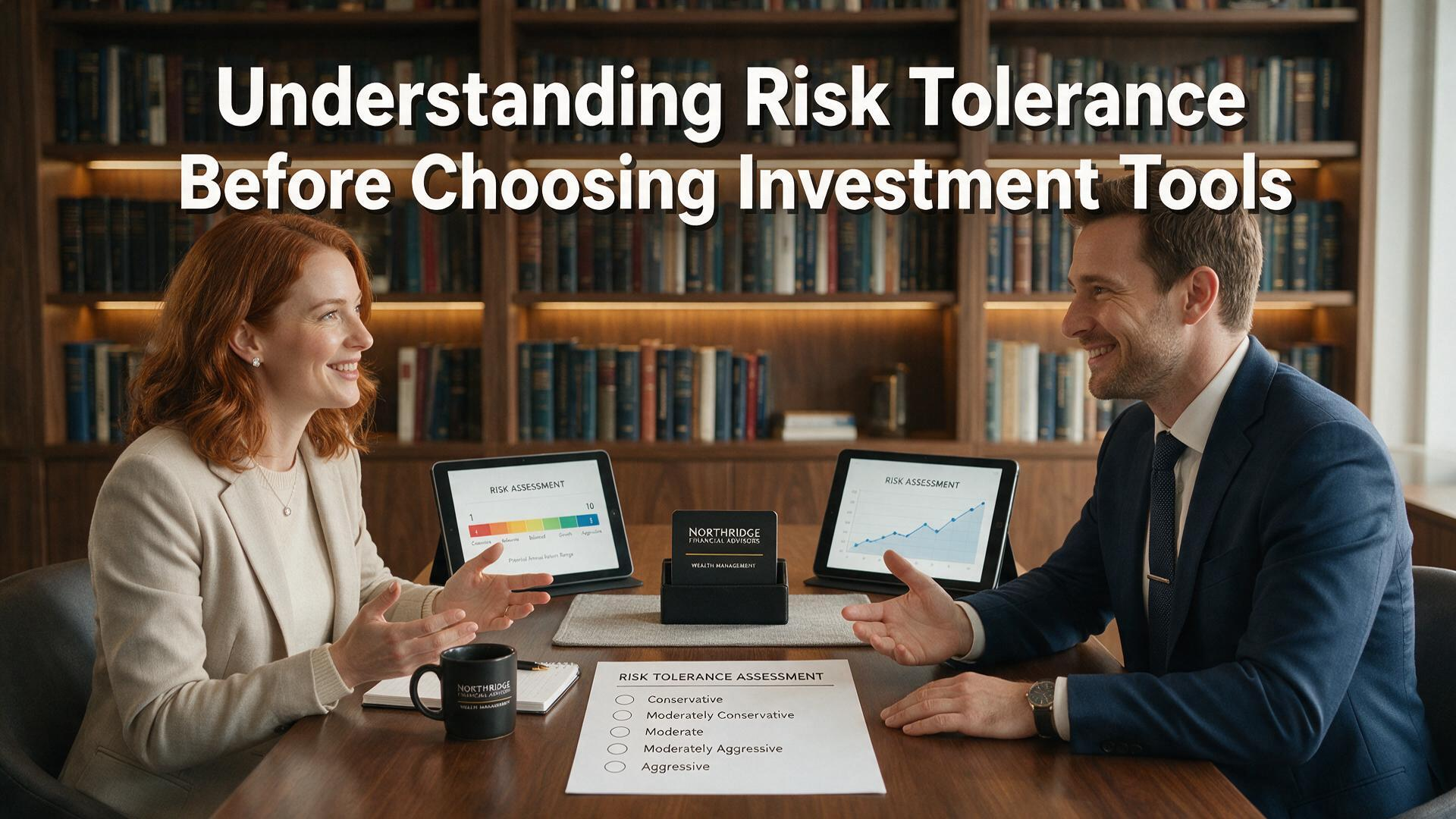
The Question Every Investor Answers Wrong
Ask someone how much risk they can handle and you'll usually get a confident answer. Moderate, they'll say. Or aggressive, but not reckless. Or conservative, but not so conservative that I miss out. Those labels feel meaningful, but they're almost useless in practice. Risk tolerance isn't a personality trait you can summarize in one word. It's a complex mix of your financial capacity to absorb losses, your psychological comfort with uncertainty, and your actual behavior under stress. Getting it wrong is one of the most common reasons investors abandon their plans at the worst possible moment, and it's why understanding investment risk tolerance properly is the foundation of every good investment decision.
The problem starts with the gap between what people say and what they do. In calm markets, everyone feels brave. A survey about risk tolerance conducted during a bull market will produce much more aggressive answers than the same survey conducted during a crash. People imagine how they'd feel in a hypothetical scenario, and they usually imagine themselves handling it well. But actual losses feel different from imagined ones, and the gap between the two can be wide enough to turn a carefully constructed portfolio into a panic sale. The investor risk profile that's accurate has to account for behavior, not just preferences.
There's also the difference between risk capacity and risk tolerance. Capacity is objective—how much you can afford to lose without derailing your financial plan. Tolerance is subjective—how much loss you can stomach without losing sleep or abandoning your strategy. A young investor with a stable job and decades until retirement has high risk capacity, but they might have low risk tolerance if they're anxious by nature. An older investor with a large portfolio might have low capacity but high tolerance, because they've been through market cycles before and know they can handle them. The portfolio risk management that works accounts for both, because mismatching either one leads to bad outcomes.
What Actually Determines Your Risk Tolerance
Risk tolerance is shaped by a combination of factors, and understanding them helps you assess your own more accurately. The first is time horizon. If you have decades until you need the money, you can afford to take more risk, because you have time to recover from downturns. If you need the money soon, you can't. That's not just a financial fact—it's a psychological one. An investor with a long horizon can look past short-term losses more easily than one who's depending on the money next year.
Income stability is another factor. A person with a steady salary and strong job security can afford to take more risk than someone with variable income or uncertain employment. The stable earner knows they can keep contributing through a downturn and wait for recovery. The uncertain earner might need to withdraw at the worst moment. The risk assessment tools that work include questions about income stability, because it's as important as the size of the portfolio.
Past experience plays a role too. Someone who lived through the 2008 financial crisis and watched their portfolio recover has a different perspective than someone who started investing during a long bull market and has never experienced a significant drawdown. Experience isn't always a good guide—the past doesn't repeat exactly—but it does shape how you react to volatility. The investment planning tools that account for experience can help you calibrate your expectations, rather than assuming the future will look like the recent past.
Personality and psychology matter as much as any financial factor. Some people are naturally anxious about money and lose sleep over small losses. Others are constitutionally optimistic and can ride out big drawdowns without much distress. Neither is right or wrong, but they call for different portfolios. The investor risk profile that's accurate reflects who you are, not who you think you should be. Being honest about your emotional reactions is more important than following a formula.

Why Self-Assessment Is So Hard
Most risk tolerance questionnaires are flawed, and the flaw isn't in the questions—it's in the context. They ask you to imagine scenarios and choose how you'd respond, but imagination is a poor substitute for experience. A question like "what would you do if your portfolio dropped 20%?" is easy to answer in the abstract. It's much harder to answer when it's actually happening, and your account balance is real. The risk assessment tools that work acknowledge this limitation and try to account for it, but no questionnaire can fully capture how you'll feel in the middle of a crisis.
There's also a social desirability bias. People want to see themselves as brave, rational, and long-term thinkers. So they answer questions in ways that make them look good, rather than ways that reflect their true behavior. They say they'd buy more during a downturn, when in reality they'd probably sell. They say they're comfortable with volatility, when in reality they check their portfolio every day and worry. The investor risk profile that's useful has to cut through that bias, and that's hard to do with a self-administered questionnaire.
The best way to assess your risk tolerance is to look at your actual behavior. How did you react during the last market downturn? Did you sell, hold, or buy? How often do you check your portfolio? Do you lose sleep when it's down? Have you ever abandoned an investment strategy because it was underperforming? Those are more reliable indicators than any hypothetical scenario. The portfolio risk management that works is based on evidence, not aspiration.
It's also worth considering how your risk tolerance might change. People often become more risk-averse after a loss and more risk-tolerant after a gain, which is the opposite of what a rational investor should do. Understanding that tendency and accounting for it can help you avoid making decisions based on temporary emotional states. The investment planning tools that work include mechanisms for staying disciplined when your emotions are pulling you in a different direction.
How Risk Tolerance Shapes Your Portfolio
Your risk tolerance should determine your asset allocation—the mix of stocks, bonds, and cash in your portfolio. A high risk tolerance allows for a higher stock allocation, which offers more growth potential but more volatility. A low risk tolerance calls for more bonds and cash, which offer stability but lower returns. The right allocation is the one that lets you capture enough growth to meet your goals while keeping the volatility manageable enough that you don't panic and sell.
The portfolio risk management process isn't just about the stock-bond split. It's also about the types of stocks you hold. A portfolio of large-cap dividend stocks is less volatile than a portfolio of small-cap growth stocks, even if both are 100% equities. The mix within the stock allocation matters as much as the mix between stocks and bonds. The investment risk tolerance that's accurately assessed should inform both decisions, not just one.
Risk tolerance also affects how you rebalance and how often you review your portfolio. An investor with high tolerance might be comfortable checking their portfolio less often, because they're not worried about short-term fluctuations. An investor with low tolerance might need more frequent reviews to feel comfortable, even if that means more temptation to tinker. The investor risk profile should inform your behavior, not just your asset allocation.
Finally, risk tolerance should guide your choice of investment tools. A risk-tolerant investor might be comfortable with individual stocks, sector funds, or alternative investments. A risk-averse investor might prefer broad index funds, bond funds, and certificates of deposit. The right tools are the ones that match your tolerance and your goals, not the ones that have performed best recently or that your friends are using. The investment planning tools that work are the ones that fit your specific situation.
Matching Tools to Tolerance
Once you have a realistic sense of your risk tolerance, you can choose investment tools that match it. For conservative investors, the priority is stability and capital preservation. That means a heavy allocation to bonds, cash, and low-volatility equity funds. The risk assessment tools that produce a conservative profile should lead to a portfolio that's designed to hold up in bad markets, even if it doesn't capture all the upside in good ones.
For moderate investors, the priority is balance. That means a mix of stocks and bonds that offers growth potential without excessive volatility. A portfolio that's roughly 60% stocks and 40% bonds is a common starting point for moderate investors, though the right mix depends on the individual. The portfolio risk management for moderate investors focuses on keeping the allocation consistent through market cycles, rather than trying to time the market.
For aggressive investors, the priority is growth. That means a high stock allocation, potentially with exposure to smaller companies, international markets, and higher-growth sectors. The investment risk tolerance that justifies an aggressive portfolio should come with a clear understanding of the potential for significant losses, and a plan for how to handle them. Aggressive investors need to be honest about whether they can actually tolerate the volatility that comes with their allocation.
Whatever your tolerance, the key is consistency. Your portfolio should match your risk tolerance, and your risk tolerance should be reflected in your behavior. If you find yourself losing sleep over your portfolio, your allocation is probably too aggressive. If you find yourself bored by your returns, it's probably too conservative. The investor risk profile that's accurate is the one that lets you stay invested through the full cycle, not the one that looks best on paper. Finding that balance is the essence of good investing, and it starts with understanding yourself.