 By admin
Consistency Beats Brilliance
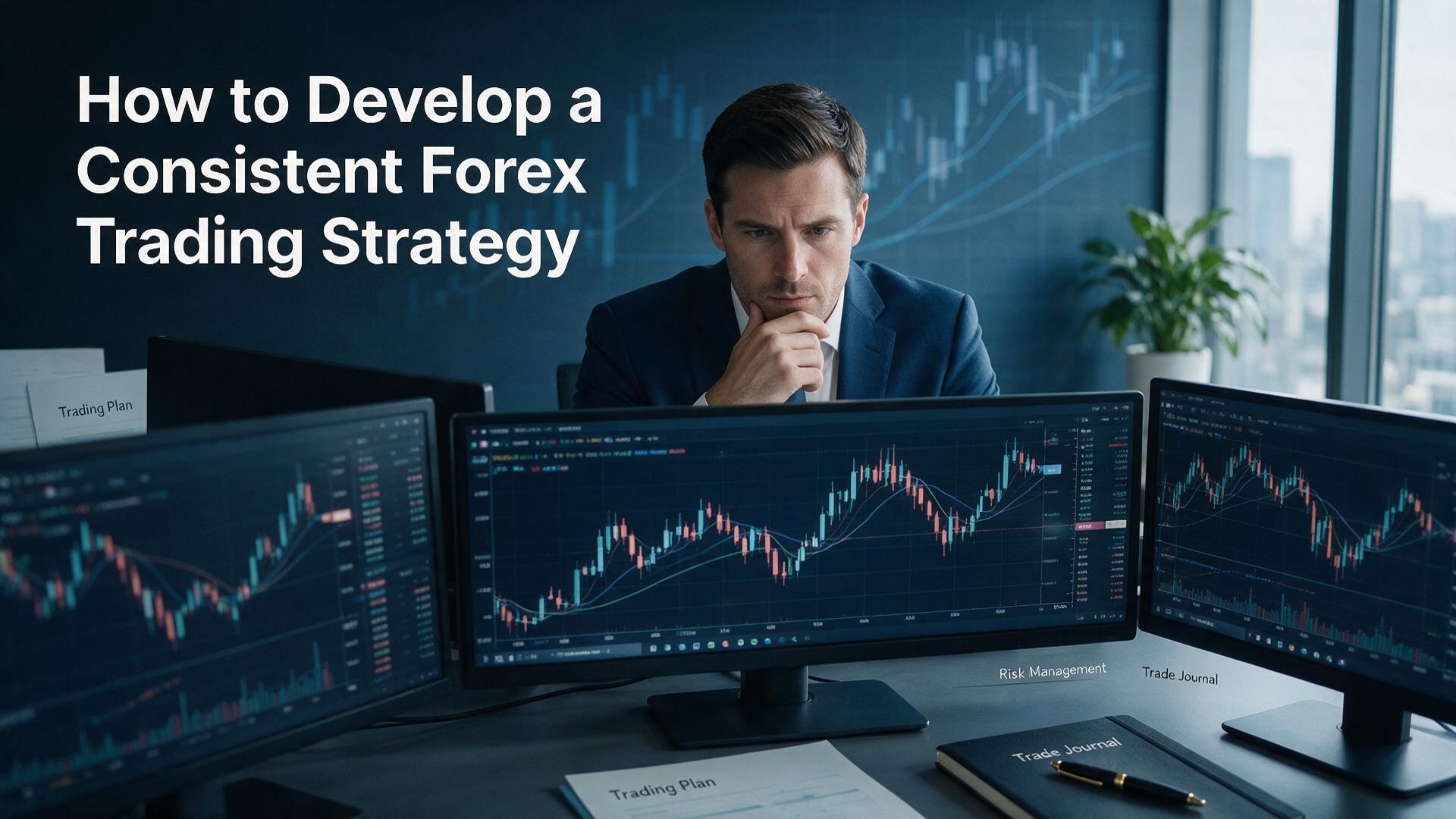
Ask a room full of forex traders what makes someone successful and you'll hear a lot of different answers. Some will say it's a good system. Others will say it's discipline, or screen time, or the ability to read price action. All of those matter, but none of them is the real differentiator. The traders who last aren't the ones with the most sophisticated setup or the sharpest instincts. They're the ones who do the same things the same way, day after day, regardless of whether they're winning or losing. That's what forex trading strategies are really about — not finding a magic formula, but building a process you can repeat.
The forex market is the largest and most liquid financial market in the world, with trillions of dollars changing hands every day. That sounds like an opportunity, and it is, but it's also a source of chaos. Currency prices are influenced by central bank policy, economic data, geopolitical events, and the collective psychology of millions of participants. Trying to predict what will happen next is difficult even for professionals with decades of experience. The traders who succeed aren't the ones who predict better — they're the ones who manage risk, follow their rules, and accept that they'll be wrong sometimes.
Consistency in foreign exchange trading doesn't mean making money every day. It means making the same decisions in the same circumstances, regardless of emotion. It means having a plan for every trade before you enter it, and following that plan even when it feels uncomfortable. It means sizing positions the same way, using the same entry criteria, and exiting according to the same rules. That kind of discipline is boring, and boring is exactly the point. Excitement is expensive in trading, because it leads to impulsive decisions that don't fit your strategy.
Choosing a Style That Fits Your Life
The first step toward a consistent strategy is choosing a trading style that fits your schedule and temperament. There are three broad approaches, and each requires a different kind of attention. Day trading involves opening and closing positions within a single day, often within hours or minutes. It requires constant screen time, quick decision-making, and the ability to handle stress. Scalping is an even faster version, with trades lasting seconds or minutes and profits coming from small price movements. Swing trading holds positions for days or weeks, capturing larger moves and requiring less screen time but more patience. Position trading holds for weeks or months, based on longer-term trends.
The right choice depends on how much time you can realistically devote to the market. If you have a full-time job and can only check charts in the evening, day trading isn't realistic — you'll miss the moves and make decisions based on incomplete information. Swing trading might be a better fit, because it lets you analyze the market when you have time and hold positions through the noise. If you have the time and temperament for it, day trading can work, but it's much harder than the internet makes it look. Most successful day traders treat it as a full-time job, not a hobby.
Currency trading techniques also vary by style. Day traders rely heavily on technical analysis, using short-term charts and indicators to find quick entries. Swing traders combine technical and fundamental analysis, looking for setups that can play out over days or weeks. Position traders focus more on macro trends, interest rate differentials, and economic fundamentals. The technical tools differ, the time frames differ, and the risk management differs. Choosing a style isn't just about preference — it's about matching your approach to the way you actually live and think.
There's also the question of trading pairs. Major pairs like EUR/USD and USD/JPY offer the most liquidity and the tightest spreads, which makes them easier to trade. Exotic pairs offer larger moves but wider spreads and less predictability. Many beginners start with majors because the costs are lower and the behavior is more studied. As experience grows, some traders add other pairs to diversify their opportunities. The key is to know your pairs well — their typical volatility, their response to news, and their behavior during different sessions. Trying to trade too many pairs at once spreads your attention too thin.

Building the Analytical Framework
Forex market analysis comes in two main flavors, and most successful traders use both. Technical analysis looks at price charts, patterns, and indicators to identify trends and potential entry points. It's based on the idea that price reflects all available information and that patterns tend to repeat. Fundamental analysis looks at economic data, central bank policy, and geopolitical events to understand the forces that drive currency values. It's based on the idea that currencies move for reasons, and understanding those reasons gives you an edge.
Technical analysis is the more common tool for short-term traders, and there's a good reason for that. Price charts are widely available, the tools are relatively easy to learn, and the patterns can be identified in real time. Support and resistance levels, trendlines, moving averages, and momentum indicators are the building blocks. But technical analysis has limits. Patterns don't always work, and they can be interpreted differently by different traders. The best use of technical analysis is as a framework for identifying setups and managing risk, not as a crystal ball that tells you what's going to happen next.
Fundamental analysis is essential for understanding the bigger picture. Interest rate differentials are one of the most important drivers of currency movements. When a country raises rates, its currency tends to strengthen because higher yields attract capital. Inflation, employment, GDP growth, and trade balances all influence central bank policy, which in turn influences currency values. Economic calendars track the release of these data points, and experienced traders know which releases matter and how the market typically reacts. Ignoring fundamentals is dangerous, even for short-term traders, because a surprise data release can wipe out a technical setup in seconds.
The most effective approach for most traders is to use fundamentals to determine direction and technicals to determine timing. If the fundamentals suggest a currency should weaken, you look for technical setups that align with that view. If the fundamentals are unclear, you wait. That combination reduces the number of false signals and keeps you aligned with the larger forces that drive the market. It's not a guarantee of success, but it's a more robust framework than relying on one approach alone. The forex trading strategies that last tend to be built on this kind of multi-layered analysis.
The Mechanics of a Repeatable System
A strategy becomes consistent when it's specific enough to be executed the same way every time. That means defining your entry criteria precisely. What setup are you looking for? What conditions must be met before you take a trade? Are you waiting for a breakout, a pullback, a certain indicator cross? The more specific your criteria, the easier it is to follow them and the less room there is for impulse decisions. Vague criteria like "I'll know it when I see it" are the enemy of consistency, because they allow your emotions to fill in the gaps.
Exit criteria matter just as much, and they're often neglected. Before you enter a trade, you need to know where you'll take profit and where you'll cut your loss. That decision should be based on your analysis, not on how you feel after the trade is open. A common approach is to set a stop-loss at a level where your trade thesis would be invalidated, and to set a take-profit at a level where you'd be satisfied with the gain. The relationship between those two determines your risk-reward ratio, and it's one of the most important variables in trading. A strategy with a favorable risk-reward ratio can be profitable even with a win rate below 50%.
Position sizing is the third pillar of a repeatable system. The amount you risk per trade should be consistent, usually a small percentage of your account, typically 1% to 2%. That way, a string of losses doesn't wipe you out, and you live to trade another day. Many traders ignore this, risking too much on trades they feel strongly about, and then blowing up when those trades go wrong. Strong feelings aren't a reliable guide to outcome. Sizing every trade the same way, regardless of conviction, keeps you in the game long enough for your edge to play out.
Finally, your system should include a review process. At the end of each week or month, review your trades and assess whether you followed your rules. The goal isn't just to evaluate profit and loss — it's to evaluate process. Did you take all the setups that met your criteria? Did you skip any that you should have taken? Did you follow your exit rules, or did you let emotions interfere? Keeping a trading journal makes this easier, and the insights you gain from regular review are often more valuable than any new indicator. The traders who improve fastest are the ones who treat their own performance as data to be analyzed.
Risk Management as the Foundation
Forex risk management is what separates traders who survive from those who don't. The forex market is highly leveraged, which means small price movements can produce large gains or losses. That leverage is a double-edged sword. It can amplify returns, but it can also amplify mistakes to the point where a single bad trade wipes out months of gains. Managing that risk is the single most important skill in forex trading, and it's often the one that beginners neglect the most.
Leverage itself isn't the problem — it's how it's used. A trader who risks 1% of their account per trade with 50:1 leverage is in a very different position from one who risks 10% of their account with the same leverage. The former can survive a string of losses; the latter might not. Understanding your actual exposure, not just the leverage ratio, is essential. Many brokers allow you to adjust your leverage, and choosing a lower setting can be a simple way to reduce risk. It's worth taking advantage of that option if you're new or uncertain.
Correlation is another risk that's easy to overlook. Trading multiple pairs that move together doesn't provide diversification — it concentrates risk. If you're long EUR/USD and long GBP/USD, you're essentially making two bets on dollar weakness, and a dollar rally will hit both positions at once. Being aware of correlations between the pairs you trade, and sizing your overall exposure accordingly, prevents the kind of concentrated loss that comes from what looks like a diversified portfolio but isn't. The classic approach is to limit exposure to any single currency and to avoid taking positions that are highly correlated.
Risk management also includes managing your own psychological state. Trading when you're tired, stressed, or emotionally compromised is one of the most common ways to make bad decisions. Setting rules for when you'll trade and when you'll step away is as important as setting rules for entries and exits. Some traders avoid trading after a big loss, or after a big win, because those states can lead to overconfidence or revenge trading. Others set specific hours for trading and stick to them, avoiding the temptation to trade outside those windows. The specific rules matter less than the principle: protect yourself from yourself, because your emotions are just as much of a risk as the market.
The traders who succeed over the long run are the ones who treat consistency as a discipline rather than a goal. They show up every day with a plan, follow that plan regardless of how they feel, and review their results honestly. They accept that they'll be wrong sometimes and that losses are part of the process. They don't chase excitement or try to make up for a bad day with a big bet. They just keep doing the same things, the same way, and let the edge play out over time. That's not glamorous, but it's what works.