 By admin
Volatility Is Not the Same as Risk
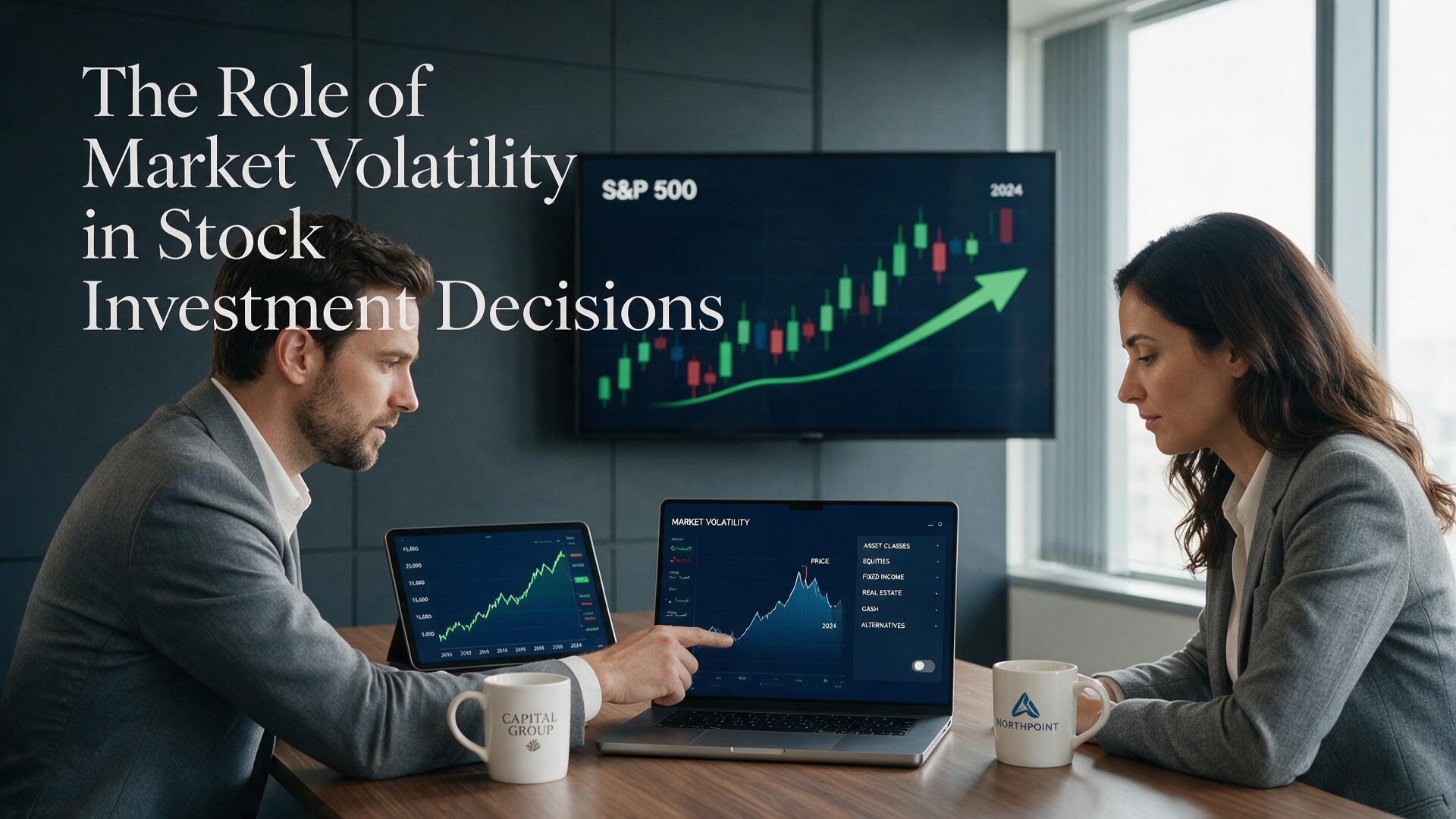
Ask ten investors what volatility means and you'll probably get ten variations of the same answer: it's when stocks go down a lot. That's not quite right, and the misunderstanding costs people real money. Volatility is simply the size and speed of price movements, in both directions. A stock that jumps 4% in a day is volatile whether it jumped up or down. Risk, on the other hand, is the chance of permanent loss — selling at the bottom, owning a business that never recovers, or being forced out of a position at the worst possible moment. The two concepts get tangled together all the time, and untangling them is the first step toward making better decisions. Stock market volatility isn't your enemy. It's the price you pay for the returns that stocks offer, and once you understand it, you can start using it instead of fearing it.
Here's the part that trips people up. Volatility feels like risk because it's uncomfortable. Watching your portfolio drop 15% in a month is genuinely unpleasant, and the urge to do something about it is powerful. But for a long-term investor who isn't selling, that drop is a paper loss, not a real one. It becomes a real loss only if you sell, or if the company you own is permanently impaired. The investors who understand this distinction can sit through drawdowns that send others running, and that patience is one of the most reliable sources of advantage in the market. It's not about being fearless. It's about being clear on what you're actually risking.
There's also a useful reframe that helps during rough patches. Volatility is what creates opportunity. If prices never moved, there would be no way to buy something for less than it's worth. Every market panic, every sharp selloff, every stretch of turbulence is a chance to buy good businesses at prices that calm markets never offer. The investors who built lasting fortunes generally did so by being buyers when others were sellers, and that behavior is only possible if you've made peace with volatility rather than trying to avoid it. You don't have to enjoy the ride. You just have to stay on it.
What Actually Drives Market Fluctuations
Stock market fluctuations come from a few main sources, and understanding them makes the noise easier to filter. The first is news and events. Earnings surprises, economic data, geopolitical developments, and central bank decisions all move prices in the short term. Most of these events are unpredictable and most of their effects are temporary, but the market reacts to them in real time because it's constantly repricing the future. The second source is sentiment. Investor mood swings between optimism and pessimism, and those swings get amplified by media coverage and social media. When everyone is euphoric, prices get pushed above what fundamentals justify. When everyone is terrified, prices get pushed below. Sentiment-driven moves tend to reverse over time, which is why they're often opportunities rather than warnings.
The third source is structural. Some volatility comes from the mechanics of the market itself — index rebalancing, options expiration, forced selling by leveraged funds, and the like. These flows can move prices in ways that have nothing to do with the underlying businesses, and they often create short-term dislocations that patient investors can exploit. The fourth source is fundamental. Sometimes volatility reflects real changes in a company's prospects or the economy's trajectory. Not every drop is noise, and distinguishing between a sentiment-driven dip and a fundamental deterioration is one of the core skills of investing.
It's also worth understanding that volatility clusters. Calm periods tend to be followed by calm periods, and turbulent periods tend to be followed by more turbulence. This is why markets can go months without a significant drop and then experience several sharp moves in a row. The clustering happens because the same forces that cause one spike often cause another — a rise in uncertainty tends to persist until the uncertainty is resolved. For investors, this means that turbulent periods feel longer and scarier than they actually are, and that the calm periods can lull you into a false sense of security. Neither state lasts forever.
The VIX, often called the market's fear gauge, is one way to track volatility in real time. It measures the implied volatility of S&P 500 options, which is essentially what traders are willing to pay to protect against or bet on big moves. A high VIX signals fear and uncertainty, while a low VIX signals complacency. Neither is a precise timing tool, but the VIX is a useful reminder that volatility is cyclical and that extreme readings in either direction often precede reversals. Watching it can help you stay grounded when the headlines are screaming.

Building a Portfolio That Can Handle the Bumps
The best defense against volatility isn't prediction — it's construction. Market risk management starts with diversification across asset classes, sectors, and geographies. When your portfolio holds things that respond differently to the same events, the overall swings are smaller, and you're less likely to panic. Stocks, bonds, and cash each behave differently in a crisis, and owning all three gives you a cushion. Within stocks, spreading holdings across sectors and regions reduces the risk that a single shock will devastate your portfolio. The goal isn't to eliminate volatility — that's impossible — but to make it manageable enough that you can stay invested through it.
Position sizing is the other core defense. A portfolio with one holding that's 40% of the total is far more volatile than one where the largest position is 5%, even if the underlying companies are similar. Sizing positions sensibly limits the damage any single mistake can do, and it also reduces the emotional intensity of a bad day. When no single holding can sink you, a sharp drop in one stock feels like an inconvenience rather than a crisis. The discipline of position sizing is one of the simplest risk management tools available, and it's one of the most effective.
Rebalancing adds another layer of protection. When markets are volatile, your allocation drifts — a rising stock market pushes your equity weight higher, while a falling one pushes it lower. Rebalancing back to your targets forces you to sell what's gotten expensive and buy what's gotten cheap, which is a disciplined way to take advantage of volatility without trying to time it. It also keeps your risk level consistent, preventing a strong market from quietly making your portfolio more aggressive than you intended. Rebalancing doesn't require frequent trading — once or twice a year, or when allocations drift significantly, is usually enough.
Cash deserves a mention too. Holding some cash might feel like a drag during a bull market, but it's a powerful tool during a downturn. It gives you the ability to buy when prices are low, and it provides a psychological buffer that makes it easier to stay calm when everything is falling. The amount of cash to hold depends on your situation, but having some dry powder is one of the simplest ways to turn volatility from a threat into an opportunity. It's not about timing the market perfectly. It's about being ready to act when opportunities appear.
Strategies That Use Volatility Instead of Fearing It
Once you've built a portfolio that can handle volatility, you can start thinking about volatility investment strategies that actually take advantage of it. The most straightforward is dollar-cost averaging — investing a fixed amount on a regular schedule regardless of what the market is doing. When prices are high, your fixed amount buys fewer shares. When prices are low, it buys more. Over time, this lowers your average cost and removes the emotional burden of deciding when to buy. It's not a way to beat the market, but it's a way to stop letting volatility dictate your behavior.
Buying in tranches is another approach. Instead of putting a large sum to work all at once, you divide it into several chunks and invest them over weeks or months. This reduces the risk of buying at a peak and smooths your entry price. It's not as optimal as buying at the bottom, but nobody can reliably identify the bottom, and the psychological benefit of knowing you won't be wiped out by bad timing is worth a lot. Tranche investing is particularly useful when markets are choppy, because it lets you take advantage of dips without needing to predict them.
Some investors use volatility more actively by buying when the VIX is elevated and reducing exposure when it's low. The idea is that high volatility often corresponds to low prices, and low volatility to high prices. This approach requires discipline and a tolerance for being early, because markets can stay volatile longer than you expect. But for investors who can stick with it, buying fear and selling complacency has historically been a profitable pattern. It's essentially a contrarian strategy, and like all contrarian strategies, it requires the willingness to be uncomfortable for a while.
Options strategies like selling covered calls or cash-secured puts are another way to monetize volatility. Selling a covered call generates income if the stock stays below a certain price, and selling a cash-secured put lets you buy a stock at a discount if it falls. These strategies aren't for everyone — they require understanding and carry their own risks — but they're examples of how volatility can be a source of return rather than just a source of stress. The common thread across all of these approaches is that they treat volatility as something to work with, not something to eliminate.
Keeping Your Head When Prices Swing
All the strategy in the world doesn't help if you can't manage your own reactions. Investment decision making under pressure is a skill, and it's one that improves with practice and preparation. The first step is to write down your plan before the volatility arrives. Know what you'll do if the market drops 10%, 20%, or 30%, and know what would actually change your thesis. Having that plan in writing makes it far easier to follow when the moment comes, because you've already made the decision when you were calm.
The second step is to control your information intake. Watching financial news all day is a reliable way to make yourself anxious, and anxiety leads to bad decisions. The news is designed to grab attention, and the most alarming stories get the most airtime. Limiting your exposure to that noise, and checking your portfolio less frequently, helps you stay focused on the long term. Most of the information that crosses your screen is irrelevant to a long-term investor, and filtering it out is a form of self-protection.
The third step is to keep your time horizon in view. Volatility feels worse when you're thinking about next week. When you're thinking about the next decade, a 20% drawdown looks like a normal part of a long journey. Reminding yourself why you're investing and how far away your goals are puts short-term swings in perspective. It also helps to remember that every long-term investor in history has lived through many of these episodes, and the ones who stayed invested were the ones who captured the long-term returns.
Finally, accept that you'll make some mistakes. You'll sell something you shouldn't have, or buy something too early, or hold through a drawdown that you could have avoided. That's part of the process, and berating yourself for it doesn't help. What matters is that you learn from each episode and keep going. Volatility is a permanent feature of the market, and your relationship with it will evolve over time. The investors who do best are the ones who treat it as a normal condition rather than a crisis, and who build the habits and the portfolio that let them stay calm when everyone else is losing their heads.